 Inquiry

 English
 中文简体
中文简体 Deutsch
- Type:
- Industry News
- Date
- 2026-Sep-28
News
Home / News / Industry News / Indoor vs Outdoor Pet Playpen: Weather-Resistant Material & Design Guide
Content
When comparing an indoor vs outdoor pet playpen, a buyer in Hamburg setting up a garden run faces rain, frost, and UV radiation within the first month. A retailer in Florida installing an indoor unit in a showroom deals with humidity and daily folding. The configuration you choose cannot be identical, even when the visual silhouette looks similar. The decision chain starts at material specification and ends at corrosion protection. This guide gives procurement teams the exact tolerances they need.
The core difference is surface treatment and steel gauge, not the shape of the panels. Indoor playpens prioritize portability and clean visual lines; outdoor playpens prioritize corrosion resistance and structural rigidity under wind and rain.
Indoor models use powder-coated steel wire with a coating thickness of 60 to 120 micron, rubber or nylon non-slip feet, and a folding hinge system that collapses in seconds. The market expects these units to look good in a living room, weigh less than 8 kg, and fold into a compact footprint for storage.
 Portable Indoor Metal Dog Playpen with 8 Panels and Folding DesignThis 8-panel steel playpen offers a secure, lightweight indoor enclosure with non-slip feet and quick folding storage, suitable for home use and small to medium dogs.View Product →
Outdoor models require hot-dip galvanized steel or a galvanized-plus-powder dual coating. Zinc forms a sacrificial layer that corrodes instead of the base steel, which is why galvanized panels resist rust in humid and rain-heavy regions. Field tests show that panels with a 4 to 6 mm wire diameter and square-tube frames survive storms that would bend a 3 mm indoor wire panel within a single season.
Three metals dominate pet playpen production: galvanized steel, aluminum alloy, and powder-coated iron wire. Galvanized steel remains the benchmark because zinc protects steel electrochemically, oxidizing preferentially so the base metal stays intact.
Galvanized steel offers higher load-bearing capacity and lower material cost per unit of rigidity. Aluminum alloy resists corrosion naturally without any coating, but it bends more easily under lateral force and is harder to weld into playpen frames. For products that must handle 30 kg Rottweilers or repeated body pressure from large dogs, galvanized steel is the safer procurement choice.
Powder coating delivers excellent scratch resistance and fade-resistant color, but it degrades under prolonged UV exposure and moisture ingress. Once the coating chips, the base iron wire corrodes quickly. In contrast, a galvanized panel with a powder topcoat combines sacrificial zinc protection with an aesthetically pleasing finish, which is why the heavy-duty outdoor line uses a dual-layer surface treatment.
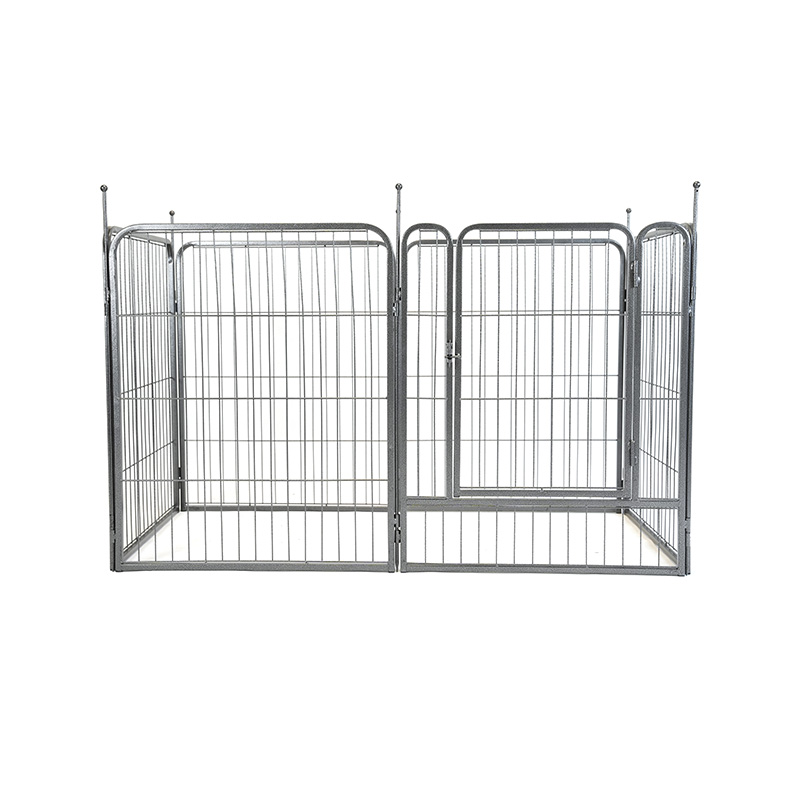 Heavy-Duty 6-Panel Outdoor Dog Fence with Rust-Resistant CoatingBuilt with galvanized steel and a dual-layer finish, this 6-panel fence provides durable, corrosion-resistant containment for medium and large dogs in outdoor settings.View Product →
Material is only half the equation. Panel height, bottom clearance, door latch quality, and the availability of a roof net decide whether a playpen survives a summer storm or an escape attempt by an agile breed.
A wind and rain protection analysis highlights the practical impact of these features:
In coastal tests, playpens with stainless steel bolt latches and hot-dip galvanized panels maintained full functionality for four continuous years. Units with spring latches failed at the 18-month mark due to seizure in the hinge.
The table below summarizes the practical differences between the two categories. Procurement teams can use it as a quick specification sheet before requesting a quote.
| Feature | Indoor playpen | Outdoor playpen |
| Steel gauge | 3-4 mm wire | 4-6 mm wire or square tube |
| Coating | Powder coat (60-120 micron) | Hot-dip galvanized plus powder topcoat |
| Feet | Rubber or nylon non-slip | Ground stakes or reinforced base |
| Panel height | 60-90 cm | 90-150 cm |
| Weight | 4-8 kg | 12-20 kg |
| Useful life | 4-6 years | 8-15 years |
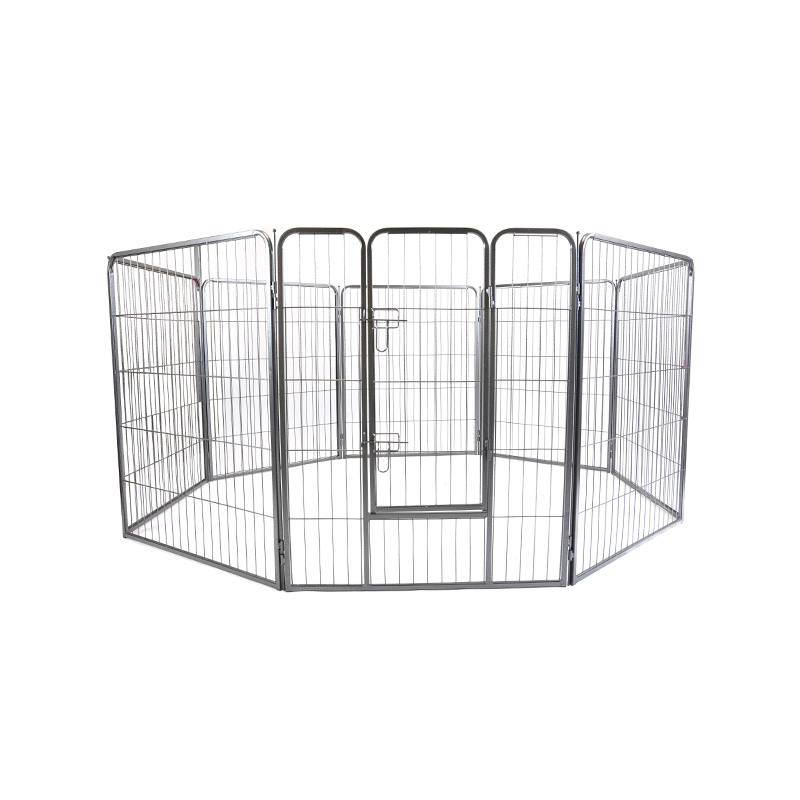 Portable Heavy-Duty 8-Panel Metal Puppy Fence for Indoor and Outdoor UseFeaturing an 8-panel configurable design, this strong metal fence is easy to assemble and fold, ideal for creating flexible play areas or sectioning spaces indoors or outdoors.View Product →
Specify the deployment environment, dog breed size, and mobility needs before picking a model. These three factors determine whether you need a 4-panel or 8-panel configuration and whether the panels must be freestanding or ground-staked.
For buyers weighing an indoor vs outdoor pet playpen as a single product line for both markets, a galvanized square-tube frame with an 8-panel layout provides the best stability-to-footprint ratio. For indoor-heavy plans, a folding 4-panel or 6-panel powder-coated model with non-slip feet is easier to store and carry.
Yes, provided it uses a hot-dip galvanized surface with a powder topcoat and sturdy feet that adapt to both carpet and grass. A purely powder-coated unit will rust within one to two years if placed outside permanently.
In temperate climates, a 70 micron hot-dip zinc layer typically lasts 10 to 15 years before significant thinning. In coastal or industrial environments with high chloride concentrations, the zinc layer degrades faster, so expect to touch up with cold-galvanizing spray from year five onward.
Galvanized steel is better for rain-heavy regions because it combines an electrochemical sacrificial layer with high structural rigidity. Aluminum alloy resists corrosion without coating but bends more easily, which matters for large dogs that jump against the panels.
For breeds like German Shepherds or Labradors, choose a minimum wall height of 120 cm; for athletic jumpers like Border Collies, go to 150 cm. The 8-panel heavy-duty configurations with a 150 cm height provide the safest containment coverage for large breeds.