 Inquiry

 English
 中文简体
中文简体 Deutsch
- Type:
- Industry News
- Date
- 2026-Sep-14
News
Home / News / Industry News / Foldable vs Fixed Dog Crate: Which One Saves More Space and Lasts Longer?
Content
An apartment owner with a 55 lb Labrador measures a 36-inch crate against a wall outlet and a closet door. A breeder with an eight-pen kennel measures the same crate against a decade of working dogs. The foldable vs fixed dog crate decision comes down to two measurable outcomes: how much floor space you reclaim when the crate is empty, and how many years the frame holds before a hinge or weld gives way. Neither answer is fixed by the label. Both depend on the specific engineering inside the product, and once a crate is installed in a room, changing your mind means a new purchase.
Foldable crates reclaim floor space when stored; fixed crates reclaim longevity through fewer failure points. A foldable dog crate collapses at pre-engineered hinge points that let the whole unit fold into a flat slab. Those same hinge points are also the risk. A fixed dog crate uses continuous welded frame members with no folding joints, so the only moving parts left are the door latch and the tray.
Wire gauge and coating quality can be identical in both types. What changes the outcome is the presence of moving joints. A good foldable crate can still last seven or eight years, but a fixed crate of the same gauge will usually outlast it because there are simply fewer parts to wear. When you evaluate suppliers for OEM projects, the same logic applies. An importer ordering 5,000 units needs to know which design will survive the retail cycle and which will generate returns. Foldable crates look good in a marketing photo, but the hinge specification determines whether the product supports a repeat order.
When a crate is not in use, a foldable model occupies about 10% of its in-use footprint; a fixed model stays at 100% regardless. For a 36-inch crate, the in-use floor footprint is roughly 3.2 square feet. Folded, the same crate drops to nearly 0.4 square feet, thin enough to slide under a bed or behind a door. A fixed crate sits wherever it sits, and that 3.2 square feet is permanently removed from the room.
To measure these numbers on any crate you own, place it on a tile floor, trace the outline, and measure the length and width. Folding the frame and measuring the collapsed slab tells you exactly what the product does to a room, and those two measurements are what most buyers compare when they make a decision.
| Crate type | In-use footprint | Stored footprint | Time to change state |
| Foldable | 3.2 sq ft | 0.4 sq ft | 45 sec |
| Fixed | 3.2 sq ft | 3.2 sq ft | Not applicable |
Standard folding models remain the most space-efficient when collapsed.
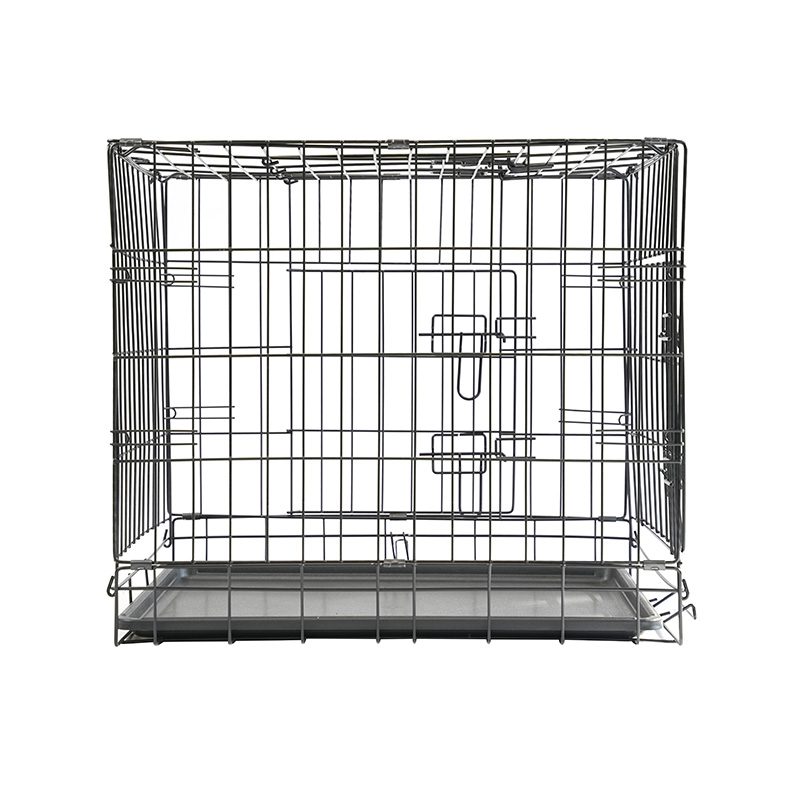
 Foldable Steel Pet Crate with Removable Tray for Dogs and CatsThis foldable steel crate offers secure containment for dogs and cats, with a removable tray for easy cleaning. Its space-saving design suits apartments and travel, while the sturdy build supports crate training and temporary housing.View Product →
A fixed heavy-duty crate generally outlasts a standard foldable crate of identical wire gauge, because the folding joints create concentrated wear points. The hinges and pivot pins carry repetitive bending loads. Over years, pins loosen, latch alignment drifts, and the powder coating chips along fold lines. A welded frame does not have those localized stress zones.
| Factor | Foldable crate | Fixed crate |
| Hinge points | 4 to 12, susceptible to wear | None |
| Frame welds | Partial, near fold lines | Continuous perimeter |
| Door lock | Same designs available | Same designs available |
| Coating wear | High at fold lines | Low |
| Rated folding cycles | 5,000 to 10,000 | Not applicable |
Before you buy a foldable crate, lift the crate by one hinge point and look for side-to-side play. If a corner moves more than a few millimeters under your hand, the pin is undersized for a large dog. That small test tells you more than the product description.
You can read the full breakdown of what factors affect the durability of metal dog cages to see how coating and assembly choices interact over time.
On the fixed side, a heavy-duty model removes the folding-joint failure mode altogether.
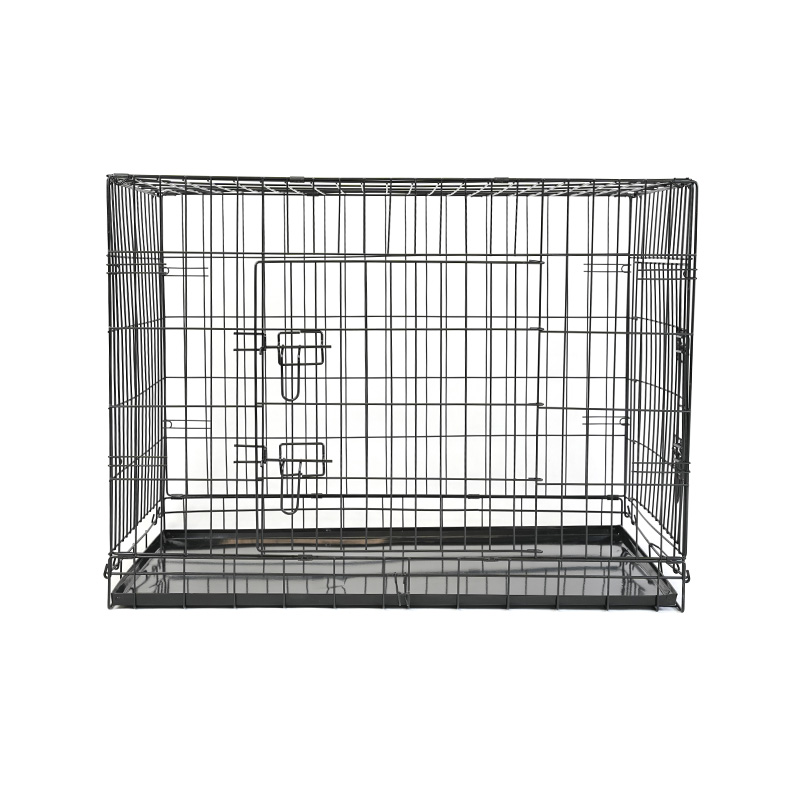
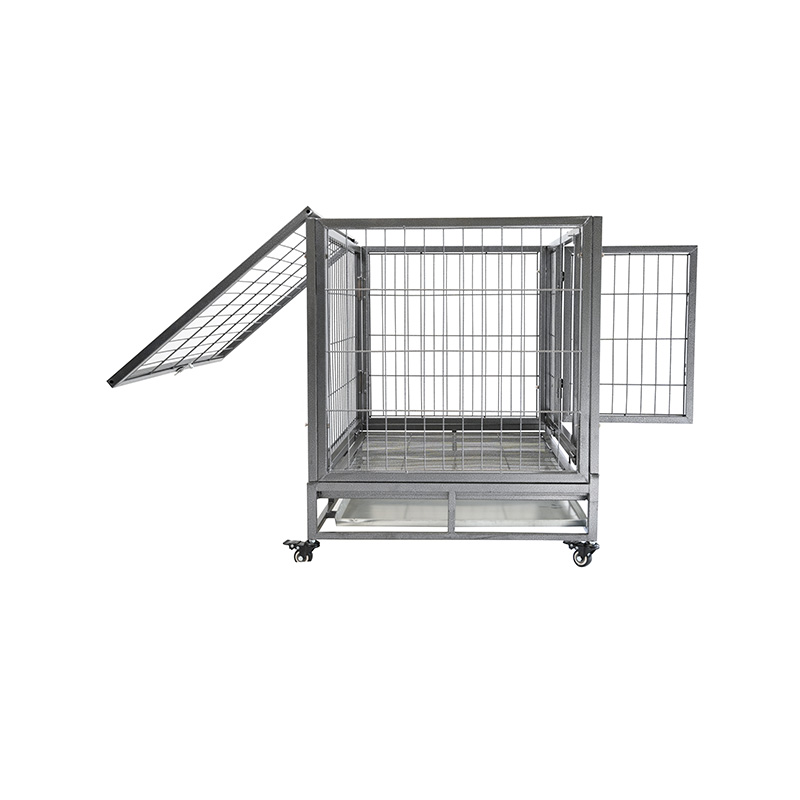 Heavy-Duty Double-Door Dog Crate for Large BreedsA durable double-door crate designed for large dogs, featuring a spacious interior for bedding and toys. Its stable construction and easy-clean tray make it ideal for permanent home placement or outdoor use.View Product →
Choose the crate type by how often you move it, not by how the design looks in a catalog. Frequent moves demand a folding mechanism. Permanent placement rewards sold structure.
Measure your dog's shoulder height and standing length before choosing a size. A crate that is too low creates discomfort and encourages a dog to attempt an escape; a crate that is too large removes the den-like sense of security that makes caging effective.
For owners who travel frequently with a dog, our guide on how suitable the foldable dog cage is for car travel covers the placement and security details that matter on the road.
For frequent movers, a foldable heavy-duty hybrid is the practical middle ground.
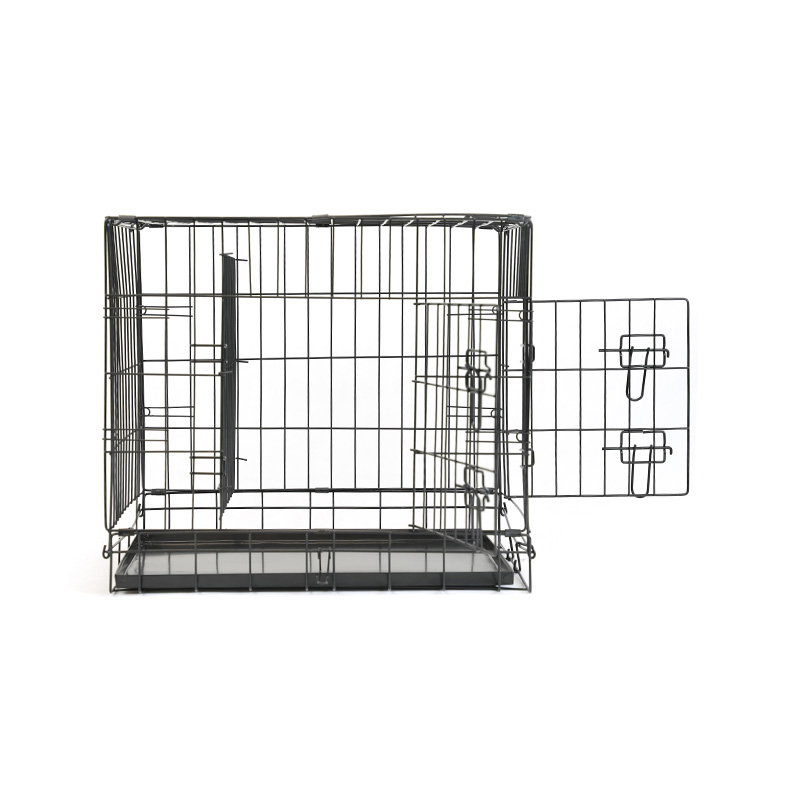
Foldable Heavy-Duty Metal Crate with Ventilation for PetsThis foldable heavy-duty metal crate combines durability with portability, featuring ventilation openings and a bottom tray. It suits frequent movers needing a sturdy yet space-saving enclosure for training or travel.View Product →The actual predictor of a dog crate's lifespan is where the manufacturer places weld strength and hinge material, not the foldable label. A manufacturer that tests raw materials before production and corrosion on finished cages before shipment produces a foldable crate that lasts longer than a poorly welded fixed crate. Nantong Dihang Metal Products Co., Ltd. runs material compatibility tests before production and corrosion tests on finished cages before shipment, which is exactly the factory-level detail that closes the durability gap.
Request third-party inspection reports and salt-spray test data before a bulk order. A supplier that documents its quality process is more likely to ship a crate that behaves consistently over years.
A standard foldable crate is not as durable as a fixed crate of the same wire gauge over a long period, because the hinge joints concentrate wear. A reinforced foldable heavy-duty crate closes most of that gap and can reach eight years of service.
No. When assembled, a foldable crate has the same footprint as a fixed crate of the same size. The space savings appear only after you collapse it.
Yes, if you need portability or storage. For dogs over 60 lbs, choose a wire gauge of 5.0 mm or thicker and verify that the hinge pins are at least 4 mm diameter.
A well-built fixed crate can last 8 to 12 years. A standard foldable crate usually lasts 4 to 6 years. A reinforced foldable heavy-duty crate can reach 7 to 9 years when the frame and hinges are engineered properly.