 Inquiry


 English
 中文简体
 Deutsch
- Type:
- Industry News
- Date
- 2026-Nov-09
News
Home / News / Industry News / What Is SGS Certification for Pet Cages? A Buyer's Guide to Test Reports
Content
A buyer requests "the SGS certificate", the supplier sends a two-page test report, and an order of 2,400 folding crates sits in a warehouse while both sides argue about vocabulary. That argument is avoidable, because SGS documents are specific, checkable and inexpensive to verify.
SGS is Societe Generale de Surveillance, the Swiss inspection, testing and certification company founded in 1878 and now operating accredited laboratories and inspection offices in more than 100 countries. For pet cages, SGS certification is not a government licence and not a permanent approval of a product line. It is a commercial third-party record of what a named sample did, under a named test method, on a named date.
SGS certification for pet cages is a third-party test report, certificate of conformity, factory audit or management-system certificate issued by SGS. It documents compliance with a specific standard or buyer specification for a specific sample or batch. It does not replace legal market requirements such as the EU General Product Safety Regulation.
Four different document types get called "SGS certification" in the pet cage trade, and each one answers a different question. Which document your buyer wants depends on whether they are validating a product, a shipment, a factory or a quality system.
| Document type | What it proves | What it does not prove |
| SGS product test report | A named sample passed or failed the test methods listed inside the report | That every unit in the order behaves the same way |
| SGS certificate of conformity | The inspected batch or shipment matches the specification written on the certificate | Ongoing approval for future production runs |
| SGS factory audit or supplier assessment | Production controls, equipment and records were reviewed on the audit date | Cage strength, coating adhesion or chemical performance |
| ISO 9001 certificate issued by SGS | The quality management system meets ISO 9001 requirements | Anything about wire diameter, weld strength or tray material |
The distinction is not academic. A retailer onboarding a new crate supplier usually asks for a product test report plus a factory audit, while a forwarder handling a one-off import may only need a batch certificate of conformity. Sending a management-system certificate in place of a product test report is the most common reason a compliance review restarts from zero.
A pet cage test report is sample-based. One report number covers the specific units pulled for testing, commonly three to eight pieces from a production-ready run, and it stops describing your product the moment the wire gauge, weld setting, powder formulation or tray resin changes.
A metal pet cage is normally tested across four groups: structural strength, surface durability, chemical safety and packaging performance. There is no single harmonised global standard for pet crates or playpens, so a credible test plan is assembled from the buyer's own specification plus general-purpose standards that accredited laboratories run daily.
Corrosion is where test budgets are won and lost. Salt spray hours are the slowest and most expensive line on that list, and results are finish-specific rather than product-specific. Manufacturers that plan finishes around the intended use test once and quote accurately, which is the same logic behind our guide to how to prevent metal pet cages from rusting.
A 480-hour salt spray cycle consumes 20 days of laboratory time before a single page of the report is written. Quotations promising a completed corrosion report inside three days are describing a different, much shorter test.
Testing belongs in the middle of a production program, not at the end. Importers who treat it as paperwork usually discover a weak weld or a thin coating after the container has already left port.
Factories that export at volume fold this sequence into the sample room rather than bolting it on later. Nantong Dihang Metal Products Co., Ltd., a pet cage and playpen manufacturer and exporter based in Nantong, China, describes raw material testing, in-process inspection and third-party verification across a pet cage and playpen range of more than 100 models, from folding crates to 16-panel outdoor pens, which is exactly the scale at which change control stops being optional.
Tray material is the clearest example of why. A heavy-duty crate with an ABS tray and the same frame with a plain plastic tray are two different products inside a compliance file, with different chemical test requirements and different report numbers.
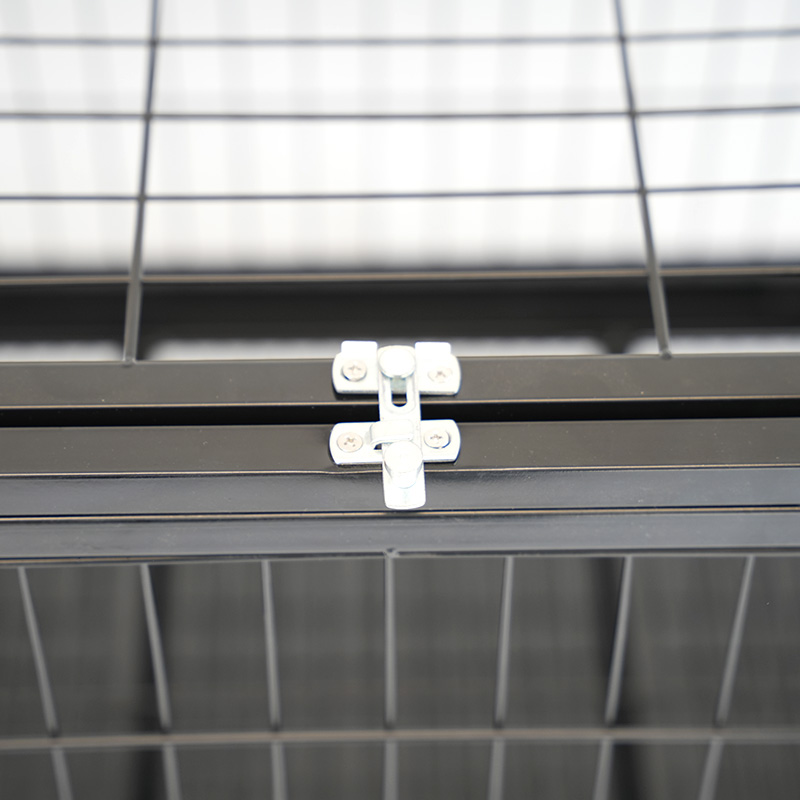 DH120-2 Heavy Duty Metal Dog Cage Pet Crate With Abs TrayDH120-2 Heavy Duty Metal Dog Cage Pet Crate With Abs Tray is a durable cage designed for pet dogs. It combines the stability of metal structure with the easy cleanabil...View Product →
Verification takes about five minutes. SGS publishes an online verification service for its own certificates and reports, so a report number that cannot be traced there is a serious problem regardless of how professional the PDF looks.
Three checks carry most of the weight: the report number, the sample description including photographs, and the named standard behind the conclusion.
Forged documents do circulate in the pet products trade, and they tend to fail on small details: a report number that belongs to a different product category, or a certificate template that no longer matches what SGS issues.
The expensive SGS mistakes are rarely laboratory errors. They are assumptions about coverage, and they surface two weeks before a retail launch rather than two weeks before shipping.
A cover, cushion or bedding set shipped with a crate is a textile product with its own testing profile, including colour fastness and restricted dyes, and in some markets flammability. It cannot inherit the metal cage report, which is why accessories need their own line in the test plan.
 Cover For Metal Pet CageThe cover for this metal pet cage affords essential safety and safety for your beloved pets. The cover functions with a convenient layout with easy-get right of entry ...View Product →
An SGS report does not make a pet cage legal, and it does not move the importer's legal obligations to the factory. That misunderstanding causes more customs and retail problems than a failed test ever does.
Under the EU General Product Safety Regulation (EU) 2023/988, applicable since 13 December 2024, consumer products placed on the EU market, pet accessories included, require technical documentation, a documented risk assessment and traceability, supported by a responsible person established in the EU. A test report is one input into that file, not a substitute for it.
A test report describes a sample. A compliance file describes a product. Most importers get into trouble when they buy the first and assume they own the second.
Outdoor playpens add requirements that a basic structural test plan never touches: ultraviolet exposure, coating chalking, ground fixing and wind load. If a playpen will live in a garden, say so in the test plan, because the gap between an indoor and an outdoor specification shows up in the report long before it shows up in a customer complaint.
 DH093-0 8 Panels Heavy Duty Outdoor Metal Pet PlaypenProduct IntroductionView Product →
No. No market requires an SGS-branded document for pet crates or playpens. Regulators require product safety compliance, and buyers choose SGS as the third-party evidence that the compliance work was actually done. That is why the same cage can ship to one customer with a test report and to another with a factory audit plus a management-system certificate.
Cost scales with the number of standards and samples, not with the size of the crate. A structural and coating program on a single model is the least expensive option, while adding chemical analysis and transit testing multiplies the quotation. Ask for an itemised quote per standard and per sample, because that is the only way to see which test is driving the price.
An SGS report is a dated record, and its validity window is set by the buyer rather than by SGS. Most importers accept reports issued within the last 12 months, and nearly all of them require a new report after any change to the wire supplier, weld settings, coating formulation or tray material.
No. Reports are tied to the sample described inside them. Different sizes built on the same construction, such as 30-inch and 48-inch inclined cages, are sometimes grouped under one test plan, but a different construction, tray type or panel count needs its own sampling and its own report number.
The practical rule for importers is short: decide what needs to be proven, name the standard, verify the report number, and write change control into the purchase contract. Do that and SGS certification stops being an argument and becomes a checklist item.