 Inquiry


 English
 中文简体
 Deutsch
- Type:
- Industry News
- Date
- 2026-Nov-23
News
Home / News / Industry News / What Is a Playpen Net and Why Do You Need It for a Metal Pet Playpen Enclosure?
Content
Measure the clear gap between two wires on a standard metal pet playpen and you will usually find 38 mm to 50 mm of open space. For an adult Labrador that gap is a wall. For a three-week-old kitten, a rabbit kit, or a toy-breed puppy, it is a doorway. A playpen net is the accessory that closes that doorway without turning a flexible exercise pen into a sealed box.
The question in the title is not rhetorical. A playpen net is one of the most requested add-ons across metal playpen ranges, and it is also the accessory most often ordered at the wrong specification. What follows covers what a net is, which four failures it prevents, the measurements that decide whether it works, and how to buy one that survives more than a single season.
A playpen net is a mesh containment layer sized to a specific panel count and pen height, fixed to the frame with elastic, hook-and-loop tape, clips, or a threaded edge rod.
It narrows the openings a small animal can squeeze through and adds a physical lid over an otherwise open frame, without changing the footprint of the pen.
Construction varies more than most buyers expect. Light versions use UV-stabilised polyester or nylon mesh with apertures between 10 mm and 25 mm, edged with elastic, hook-and-loop tape, or a flexible rod threaded through sleeves sewn onto the frame. Heavy-duty versions replace fabric with welded wire, typically 4 mm to 6 mm wire in a 25 mm to 50 mm grid, which is rigid enough to carry a cat's weight without bowing into the pen.
The net works in two directions at once. It keeps small animals inside the frame, and it keeps outside hazards away: a larger household dog, garden birds, wind-blown debris, or a child reaching over the top rail.
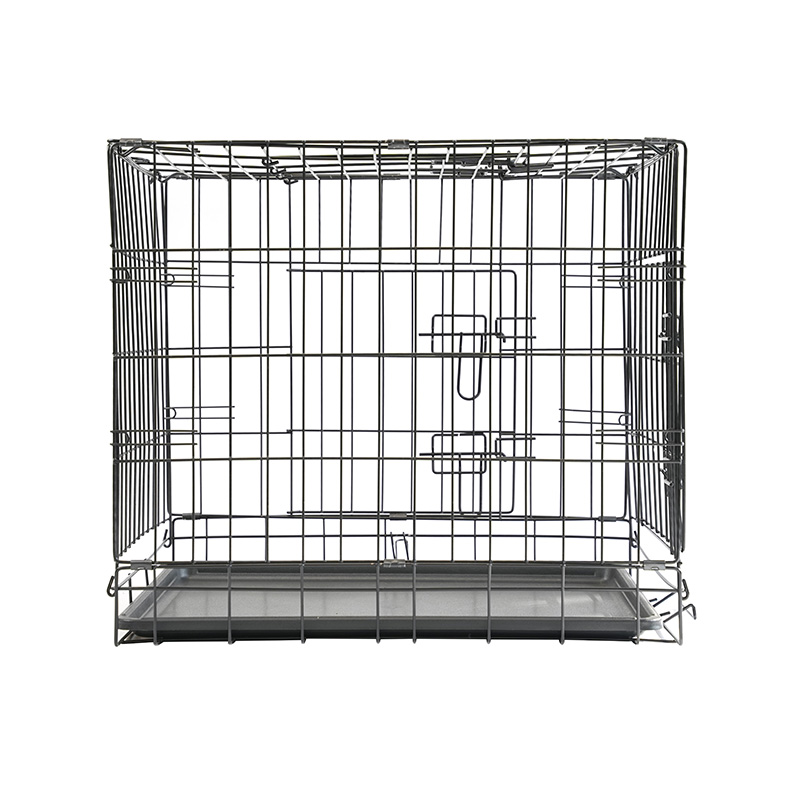
 Net For Metal Pet PlaypenThe net for a metal pet playpen is an essential accessory for providing a safe and stable space for your loved one pet. Crafted from long-lasting and incredible substa...View Product →
A playpen net earns its cost the first time it stops an escape, and escapes almost always happen at one of four predictable points.
The pattern repeats in multi-pet homes. An 8-panel pen with 50 mm wire spacing holds the resident adult dog without complaint, then a foster kitten arrives and the same pen becomes porous overnight. A mesh layer costs a fraction of a second, finer pen and folds flat with the frame. For a longer walkthrough, see this guide to creating a safer space for your pet with a net for a metal pet playpen.
Four numbers decide whether a playpen net performs: mesh aperture, wire or thread diameter, coverage pattern, and attachment hardware. Everything else is a detail.
| Specification | Typical range | What it controls |
| Mesh aperture | 10 to 25 mm fabric, 25 to 50 mm welded wire | Escape risk. An opening wider than the animal's head can be pushed through. |
| Wire or thread diameter | 1 mm nylon thread up to 6 mm welded wire | Sag. Below 3 mm wire, a mesh top bows under a 4 kg cat. |
| Coverage pattern | Top only, or top plus 250 to 300 mm side drop | Climbing. Side drops stop animals that scale the frame. |
| Attachment hardware | Elastic hem, hook-and-loop, snap clips, zip ties | Fit. Elastic slips on 16-panel pens where panel angles vary. |
| Coating and UV treatment | Powder-coated steel, UV-stabilised polyester | Service life. Untreated nylon degrades through one summer outdoors. |
| Cleaning method | Removable and washable, or fixed | Hygiene. Fixed mesh traps fur and dust within weeks. |
Aperture, not pen size, decides whether a small animal stays inside. Choose the widest opening your animal cannot push its head through, then step down one size for juveniles.
A rabbit clears 600 mm from a standing start and will test the top rail repeatedly. Side drop mesh alone leaves the lid open, so a net that covers the top and drops 250 to 300 mm down the inside face removes the launch point as well as the landing zone.
For medium and large dogs, a 50 mm welded wire top adds rigidity and keeps airflow high. Fine fabric stretched over a 16-panel outdoor pen behaves like a sail in wind, which lifts panels and loosens hinges. Match the mesh to the animal, not to the smallest hole available.
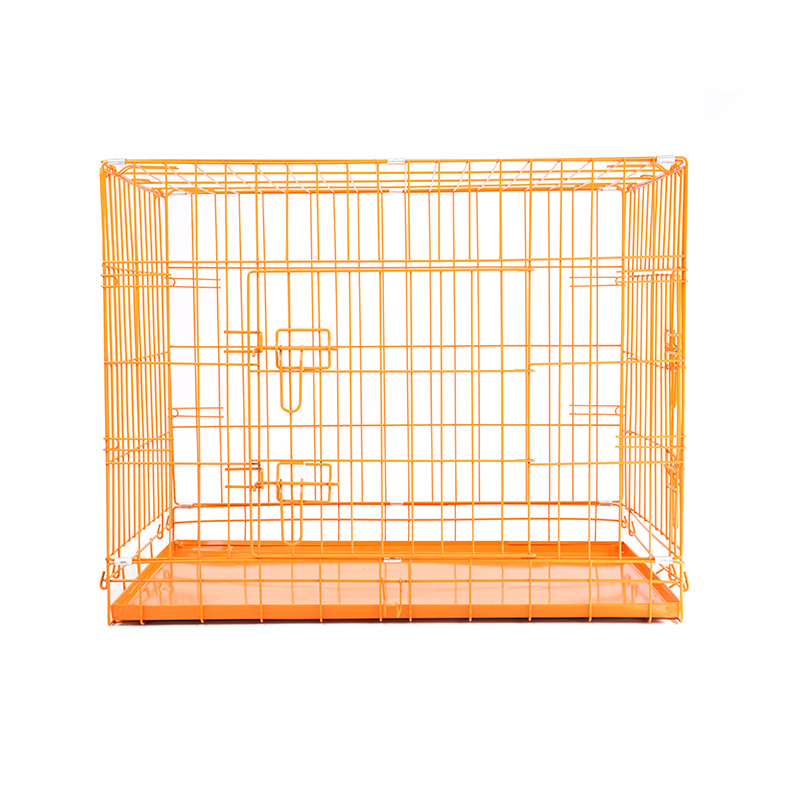
 DH051-2 8 Panels Metal Pet Playpen Folding CrateProduct IntroductionView Product →
Mesh beats solid fabric in almost every indoor pen. Solid fabric wins only when the purpose is shade, privacy, or blocking a pet's view of a trigger.
Leaving the top open is workable when the animal is a low climber, the pen sits indoors, and no other pet shares the room. It stops being workable the moment a rabbit, ferret or kitten joins the household.
Fitting takes 10 to 15 minutes on an 8-panel pen. Rushing the first two steps is what produces a net that sags within a month.
Most failed nets fail for one of five reasons, and all five are avoidable at the order stage.
For importers, distributors and brand owners, a playpen net is a specification line rather than an accessory, so the questions that matter are manufacturing questions.
Nantong Dihang Metal Products Co., Ltd. manufactures metal pet cages and playpens in Jiangsu, China, and its catalogue covers more than 100 models across metal cages, inclined cages, heavy-duty playpens and the matching net for a metal pet playpen. The company tests raw metal before fabrication, inspects finished goods for corrosion and bite resistance before packing, and runs OEM and custom production for importers and brand owners.
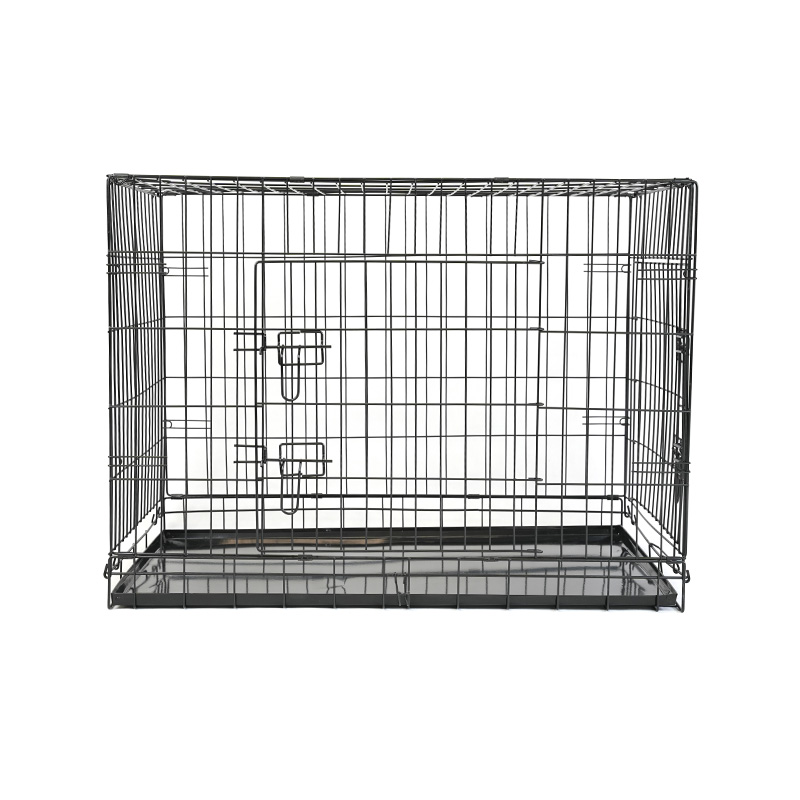
 DH093-1 6 Panels Wire Fence Pet Dog Folding Exercise Metal PlaypenDH093-1 6 Panels Wire Fence Pet Dog Folding Exercise Metal Playpen It is designed to easily adjust its shape as needed to fit spaces of different sizes, providing a sa...View Product →
Most playpen nets use UV-stabilised polyester or nylon mesh with 10 mm to 25 mm openings, edged with elastic or hook-and-loop tape. Heavy-duty versions use welded steel wire, usually 4 mm to 6 mm thick in a 25 mm to 50 mm grid.
Yes, if it is UV-stabilised and the edge hardware is corrosion-resistant. On large outdoor pens, choose a coarser welded wire top rather than fine fabric, because fine mesh acts as a sail in wind and stresses the panel hinges.
Measure the animal's head width and choose an aperture smaller than that measurement. As a starting point: 12 mm for hamsters and guinea pigs, 25 mm for rabbits and kittens, 38 mm for dogs under 8 kg, and 50 mm for medium dogs.
No. A net manages small animals and open tops; the frame still carries the load. Pens built from heavier gauge tube and welded joints remain the base requirement for large dogs, outdoor use and repeated assembly.