 Inquiry


 English
 中文简体
 Deutsch
- Type:
- Industry News
- Date
- 2026-Nov-16
News
Home / News / Industry News / Metal Pet Cage Materials: Steel, Wire Gauge, Coating and Tray Specifications
Content
Material choice drives three things at once on this product: unit cost, service life and return rate. On a typical folding crate, the ferrous wire and tube frame plus its protective coating take the largest share of the bill of materials, and the tray usually comes second. That is why experienced importers write material specifications into the purchase order before they negotiate price, and why the question of what materials are used in metal pet cages is really a question about which specifications survive a container journey, a dusty warehouse and a determined chewer.
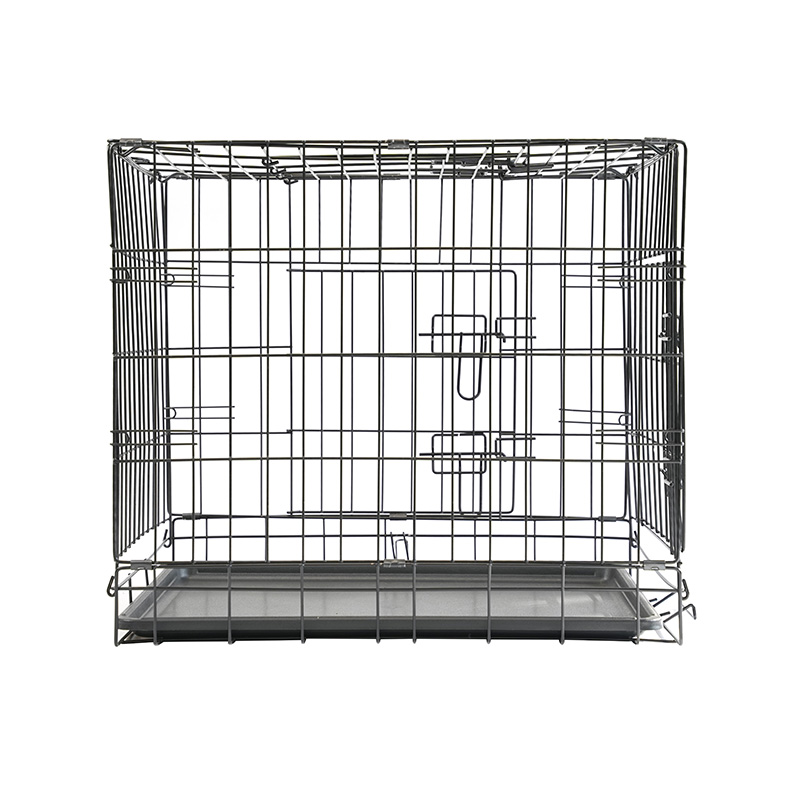
A metal pet cage is assembled from four material families: ferrous wire or tube for the frame, a metallic or organic coating for corrosion protection, a polymer or coated-metal tray for hygiene, and small hardware such as latches, rivets and hinges. Stainless steel replaces the coated steel frame only in a minority of premium and clinical products.
A standard export metal pet cage is built from low-carbon steel wire in the Q195 to Q235 range, protected by electro-galvanizing, hot-dip galvanizing or a polyester powder coat, fitted with an ABS or polypropylene tray, and closed with zinc-plated or nickel-plated hardware.
Once you separate the frame from the finish, the full material list is short and predictable:
Two of those choices decide how a cage is priced and how it is marketed. Wire diameter sets the strength class, and the coating system sets the environment the cage can live in.
A cage described as steel wire construction can still vary by a factor of two in breaking strength, because strength comes from wire diameter, weld quality and tube wall thickness, not from the word steel.
The table below lists the specifications that appear on a real purchase order for a folding metal pet cage, together with the failure each one prevents.
| Material item | Common export spec | Function | Risk if under-specified |
| Frame wire | 2.3 to 4.0 mm low-carbon steel | Load bearing, chew resistance | Wire flex, weld failure, escape |
| Square tube | 12 mm to 25 mm, 0.8 to 1.2 mm wall | Rigidity of frame and door | Door sag, racking, bent corners |
| Zinc layer | 20 to 140 g per sq m | Sacrificial corrosion protection | Surface rust within one damp season |
| Powder coat | 60 to 100 microns polyester | Barrier layer, colour, surface feel | Chipping, edge rust, buyer complaints |
| Tray | ABS 1.5 to 3.0 mm, or polypropylene | Waste containment, easy cleaning | Corner cracking, leakage in transit |
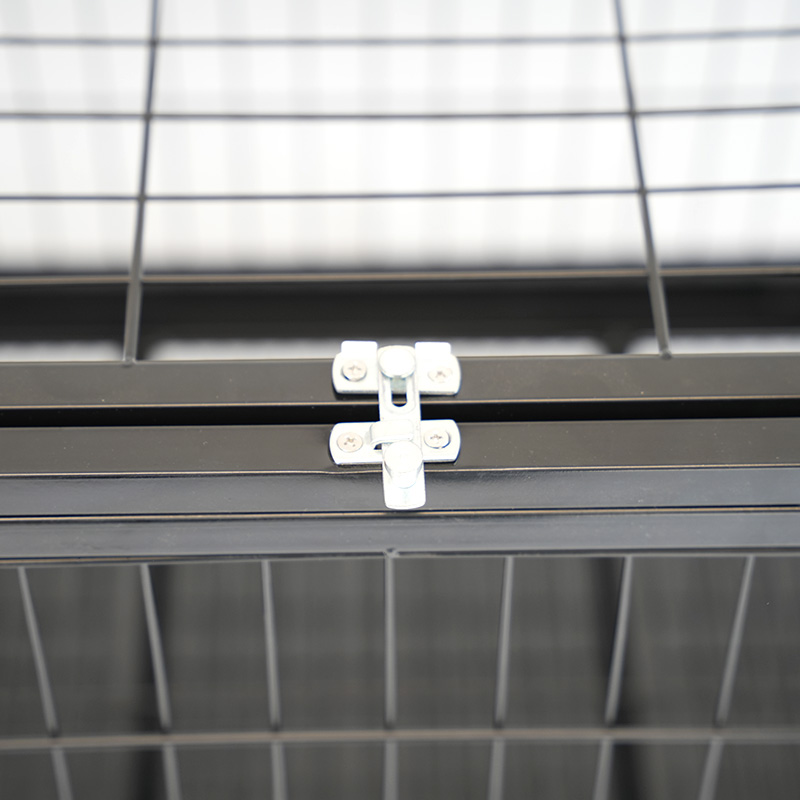
| Hardware | Zinc or nickel plated steel | Door security, folding life | Latch failure, loose hinges |
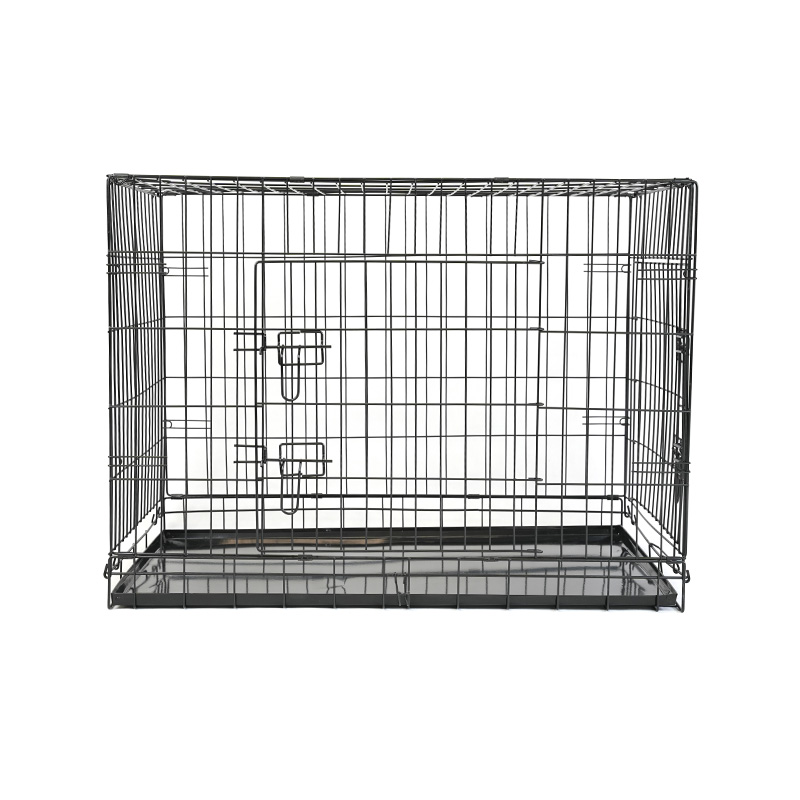
 DH120-2 Heavy Duty Metal Dog Cage Pet Crate With Abs TrayDH120-2 Heavy Duty Metal Dog Cage Pet Crate With Abs Tray is a durable cage designed for pet dogs. It combines the stability of metal structure with the easy cleanabil...View Product →
Two details on that list deserve extra attention. First, weld spacing: most export cages run a mesh pitch between 15 mm and 25 mm, and that single number decides whether a puppy's paw can pass through. Second, tube wall thickness: 0.8 mm walls are normal on 12 mm square tube frames, while 25 mm square tube on heavy duty kennels usually measures 1.0 mm to 1.2 mm, because a door that folds twice a day will start to rack within a season below that range.
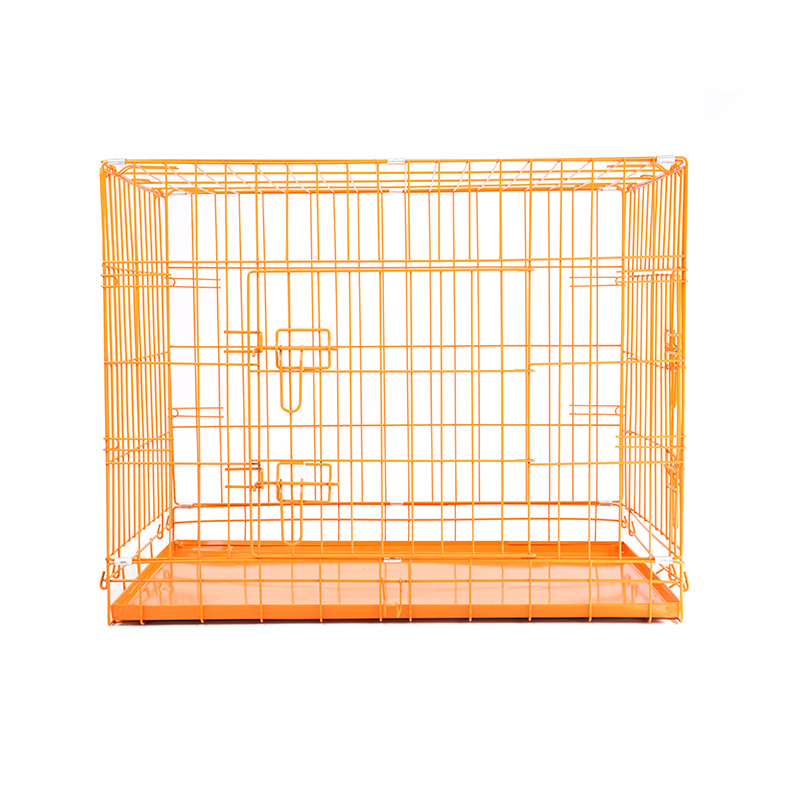
For indoor cages, powder coating over galvanized wire delivers the best durability per dollar; for outdoor playpens and kennels, hot-dip galvanizing is the only coating that reliably survives two years of weather.
Coatings do not stop rust, they delay it, and salt spray hours are the closest thing the industry has to a shared durability language. A 96-hour result is a common minimum for indoor crates, while outdoor enclosures are usually specified at 200 hours or more. If you want a longer walk-through of how coating choice interacts with frame design, this guide to metal pet cage material selection covers the same ground in more detail.
Roughly half of all material-related returns on metal pet cages trace back to the tray or the cover rather than the frame, because those are the parts a customer touches, washes and flexes every day.
 Cover For Metal Pet CageThe cover for this metal pet cage affords essential safety and safety for your beloved pets. The cover functions with a convenient layout with easy-get right of entry ...View Product →
Fabric accessories follow their own material logic. A cage cover is normally 600D Oxford polyester with a PVC backing, which blocks light and drafts without cutting off the ventilation gaps on the side panels. Cushions and bedding use polyester fibre fill with a removable, washable cover, and the zip quality matters more than the fill weight once a pet starts digging at the corners.
For buyers running an OEM programme, the tray is the easiest place to differentiate without touching tooling: tray colour, thickness and material can all be changed inside the same frame drawing, and the difference is visible to a retailer comparing two samples side by side. A metal pet cage manufacturer that stocks ABS and polypropylene in both colours can usually switch a tray specification inside one production run.
Verification is cheap compared with a rejected container: a caliper, a sample weight and one salt spray report will settle most material disputes before production even starts.
Any supplier that cannot produce a wire certificate, a coating weight figure or a salt spray report is asking you to accept the phrase high quality material as a specification. It is not one, and it will not protect you when a container of cages arrives with rust blooming along the weld lines.
Most are not. The standard frame is low-carbon steel wire with a zinc or powder coating, because stainless steel costs roughly three to five times more as a raw material. Grade 304 stainless appears in clinical, marine and high-humidity products, while grade 201 is used as a lower-cost substitute where corrosion resistance is less critical.
Hot-dip galvanizing, without exception. Its zinc layer is alloy bonded to the steel at 45 to 80 microns and typically survives 500 hours or more of neutral salt spray, while powder coating over electro-galvanized wire usually tests between 200 and 500 hours. For a permanent outdoor dog run, specify hot-dip galvanized and accept the matte grey finish.
ABS wins on impact strength and keeps its shape in cold transport, which is why it is specified on heavy duty, breeding and 2-door crates. Polypropylene is lighter, cheaper and more chemically resistant, but it deforms sooner under heat. On either polymer, a tray wall below 1.5 mm will crack at the corners within a few months of daily handling.
For dogs above 30 kg, specify 3.5 mm to 4.0 mm wire on the main panels and 4.0 mm on the door, with a square tube frame instead of a wire-only perimeter. Below 2.8 mm, a determined medium-sized dog can bow the front panel far enough to work a latch loose over time.