 Inquiry

 English
 中文简体
中文简体 Deutsch
- Type:
- Industry News
- Date
- 2026-Jan-01
News
Home / News / Industry News / What are the Key Safety and Durability Features to Look for in a Foldable Dog Cage?
Content
For pet professionals, breeders, and discerning owners, a foldable dog cage is more than a convenience item—it is a critical piece of equipment that must guarantee animal welfare and withstand rigorous use. The core challenge lies in balancing portability with uncompromising structural integrity. This engineering-focused analysis dissects the essential safety and durability features, moving beyond marketing claims to examine material science, design principles, and performance standards that define a truly reliable enclosure.
Long-term durability is dictated by the materials and construction methods employed. The frame is the primary load-bearing component, and its specification is paramount.
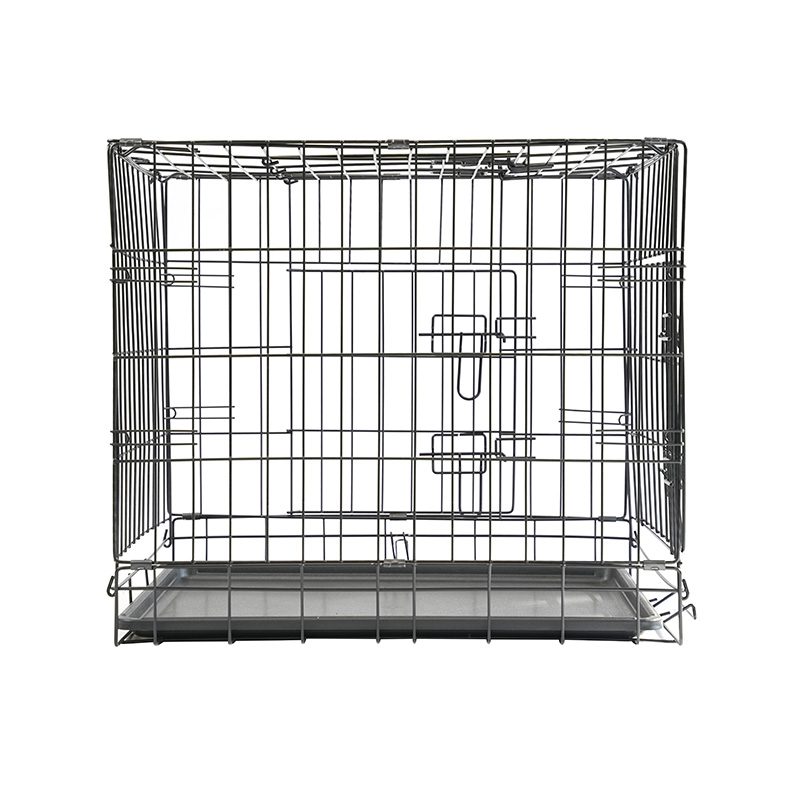
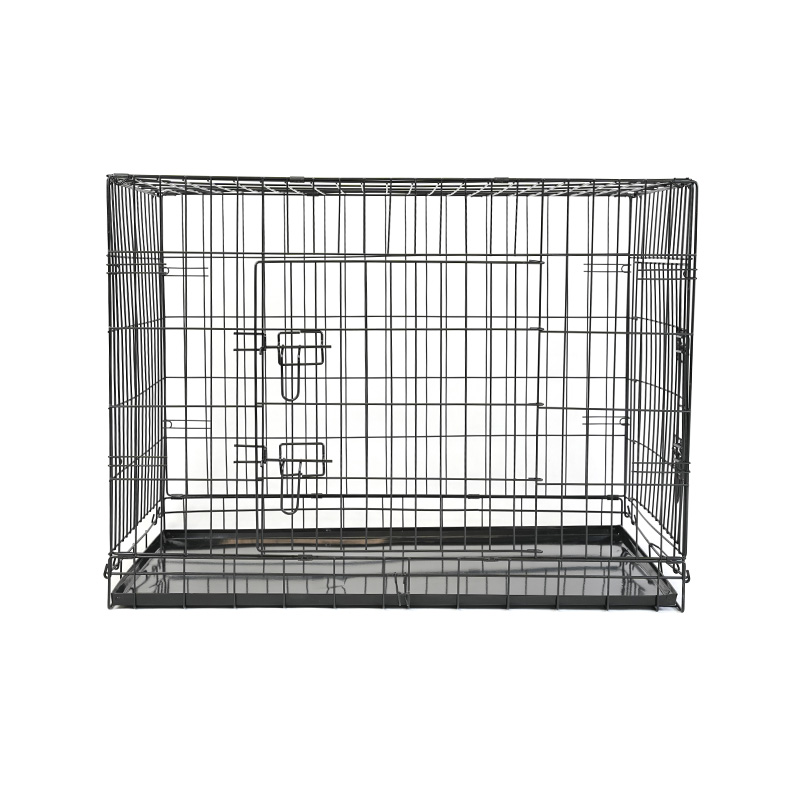
A heavy duty foldable steel dog cage sets the benchmark for strength. The key metrics are steel type, thickness (gauge), and diameter. Low-carbon steel with a high-quality electroplated or powder-coated finish offers an optimal balance of strength, formability, and corrosion resistance. Tube diameter and wall thickness directly influence resistance to bending; for large or strong dogs, a minimum of 19mm diameter with a substantial wall is recommended. The powder-coating process, involving electrostatic application and thermal curing, provides a uniform, resilient barrier superior to standard paint in chip and scratch resistance.
The folding mechanism introduces inherent points of potential failure. High-quality cages feature:
Safety is a multi-faceted requirement encompassing structural stability, internal safety, and environmental control.
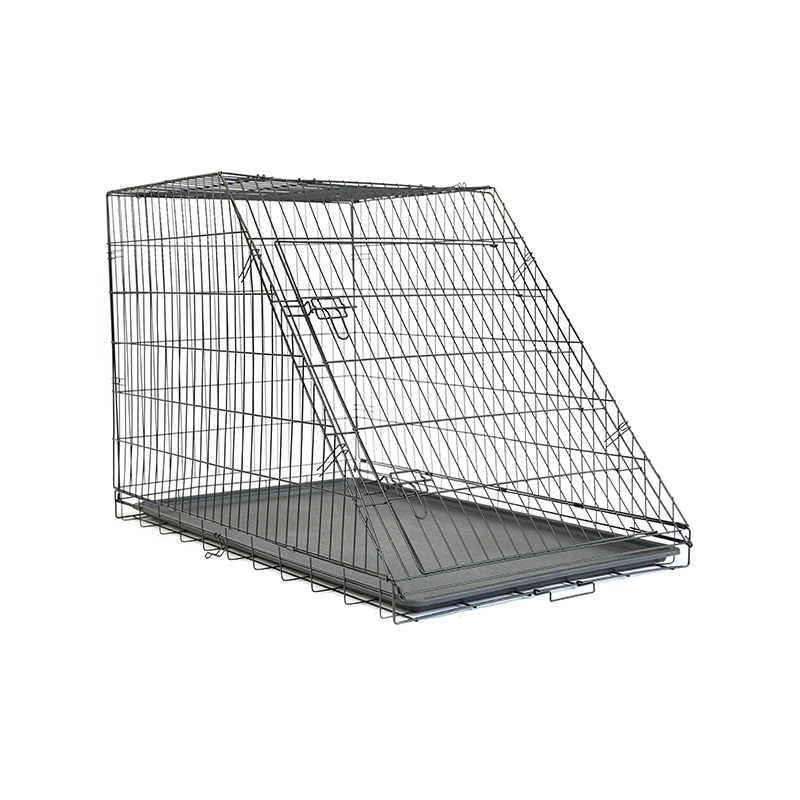
For travel, an airline approved foldable dog crate must adhere to strict regulations. The International Air Transport Association (IATA) sets guidelines that often exceed typical "sturdy" consumer expectations. Key requirements include:
Always verify the specific approval for the airline in question, as interpretations of IATA guidelines can vary.
Specialized applications demand tailored engineering solutions beyond the basic cage structure.
A foldable dog cage for large breed travel necessitates specific reinforcements. This includes additional horizontal cross-bracing on the doors and side panels to counteract the substantial leverage a large dog can apply. The floor must be supported by a closely spaced grid of load-bearing beams to prevent sagging under significant weight over time.
The requirements for a foldable dog playpen with carrying case and a waterproof foldable outdoor dog kennel converge on material resilience. For outdoor use, the focus shifts:
| Feature | Standard Indoor/Garden Cage | Heavy-Duty Outdoor/All-Weather Kennel |
| Weather Protection | Optional, often removable fabric cover. | Integrated, durable waterproof roof (e.g., coated Oxford fabric) and raised floor for drainage. |
| UV Resistance | Standard powder coat may suffice. | Enhanced UV-inhibited coatings and fabric treatments to prevent fading and polymer degradation. |
| Portability System | Simple handles or basic straps. | Padded, reinforced carrying case with robust zippers and shoulder straps for heavier folded units. |
| Base/Floor | Removable plastic tray. | Often a welded, coated wire grid to allow waste and moisture to pass through, promoting hygiene. |
Procurement decisions should be informed by objective standards. While a universal industrial standard for pet cages is still evolving, responsible manufacturers subject products to tests simulating years of use.
According to a 2024 industry white paper from the Pet Industry Sustainability Coalition (PISC), there is a growing movement toward standardizing durability and safety tests for crates and carriers. This includes cyclic load testing on doors and latches, accelerated corrosion testing (like salt spray ASTM B117) for coatings, and chew-resistance simulations. Furthermore, the latest 2025 draft update to the ASTM F2057-23 (Standard Safety Specification for Clothing Storage Units) has spurred discussions about applying similar stability and tip-over test methodologies to large, freestanding pet enclosures, highlighting an increased regulatory focus on pet product safety.
Source: Pet Industry Sustainability Coalition - 2024 Materials & Safety Report
Source: ASTM International - Standard F2057
For immediate quality assessment, a buyer can perform a simple but effective checklist: apply firm lateral pressure to test for racking, vigorously shake the assembled cage to check for rattles or flex, open and close latches hundreds of times to feel for consistent action, and inspect all interior surfaces for smoothness.
In terms of durability and safety, a high-quality powder coat is generally superior. The process creates a thicker, more uniform, and chemically bonded layer that is highly resistant to chipping, scratching, and corrosion compared to most liquid-applied epoxy paints. This makes it the preferred finish for a heavy duty foldable steel dog cage intended for long-term or outdoor use.
Use breed-specific adult dimensions as your guide. The cage must allow the dog to stand without its head touching the top, turn around freely, and lie down stretched out. For a foldable dog cage for large breed travel, add an additional margin for comfort during long journeys. Never size a cage based on a puppy's current size alone; project for its expected adult size to avoid costly replacements.
No cage is 100% escape-proof, but security can be maximized. Focus on features like double-latching doors, latches positioned externally or with protective covers, and reinforced door frames. For persistent escape artists, especially with a foldable dog playpen with carrying case style (which often has more panel connections), supplement with secondary security clips or carabiners at every panel junction.
Regular maintenance is crucial. Wipe down the frame with a damp cloth; avoid abrasive cleaners that can damage the coating. For a waterproof foldable outdoor dog kennel, regularly clear debris from the roof and check drainage. Inspect all latches, hinges, and welds monthly for signs of wear, rust, or stress. Lubricate moving parts with a silicone-based lubricant (not oil, which attracts dirt) to ensure smooth operation.
They serve different purposes. Soft-sided panels offer lightweight portability and are excellent for supervised, contained play in a foldable dog playpen with carrying case. However, they are not suitable for containment of chewers, diggers, or anxious dogs, and they lack the structural security and long-term durability of a welded steel cage. For primary confinement, unsupervised use, or travel, an all-steel or heavy-duty hybrid design is the only appropriate choice from a safety and durability standpoint.