 Inquiry

 English
 中文简体
中文简体 Deutsch
- Type:
- Industry News
- Date
- 2026-Jun-08
News
Home / News / Industry News / Metal vs. Fabric vs. Plastic: A Technical Comparison of Dog Kennels and Crates for Different Use Cases
Content
The global pet products market has expanded significantly over the past decade. Pet owners increasingly view their animals as family members and seek products that ensure safety, comfort, and convenience. Among essential pet supplies, the dog crate or kennel stands out as a versatile tool for training, travel, veterinary care, and home use.
For manufacturers, distributors, and retailers, understanding the technical differences between various crate materials and designs is essential for matching products to customer needs. Not all crates serve the same purpose. A crate suitable for a 10 kilogram terrier at home may be entirely inadequate for a 40 kilogram German Shepherd during air travel. A fabric crate that works for a calm adult dog may be destroyed within hours by a anxious puppy.
This article provides a comprehensive technical comparison of metal dog kennels and crates against fabric and plastic alternatives. We will examine material strength, ventilation, cleaning requirements, security features, and application suitability. For procurement professionals and pet product buyers, this guide serves as a reference for selecting the right crate type for different dog sizes, temperaments, and usage scenarios.
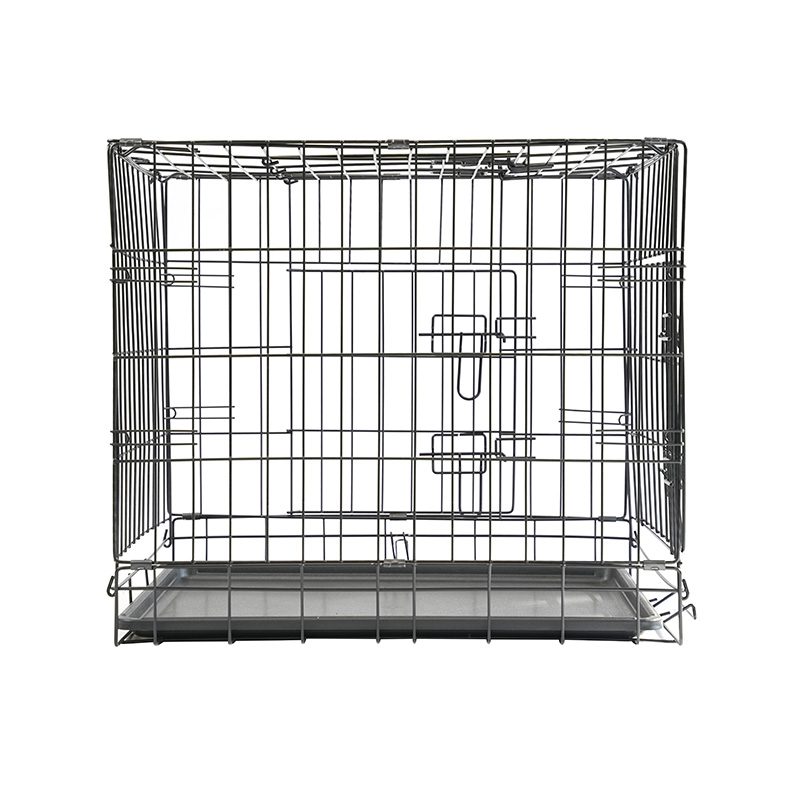
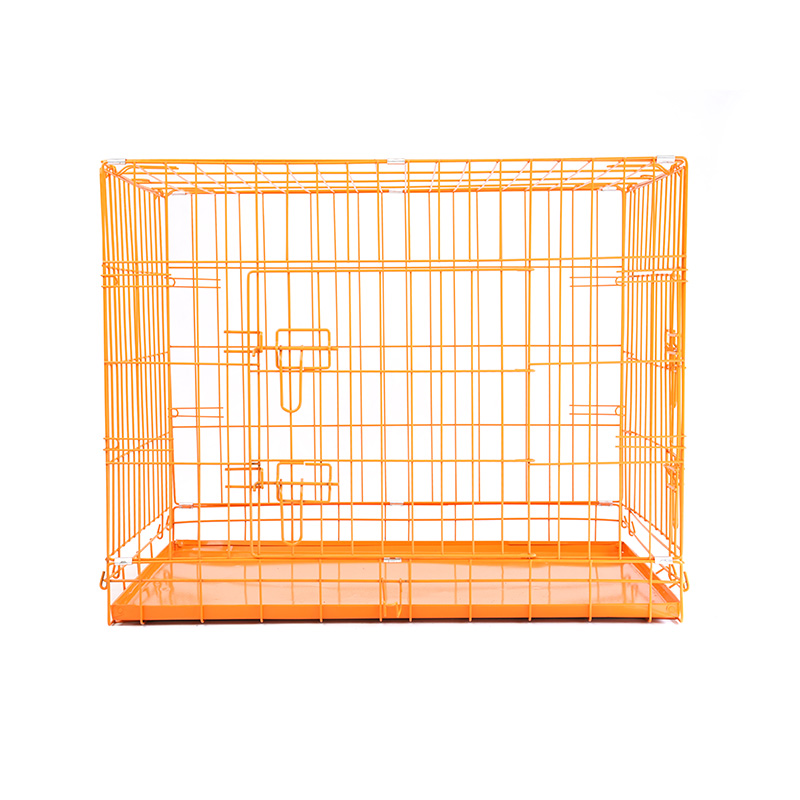
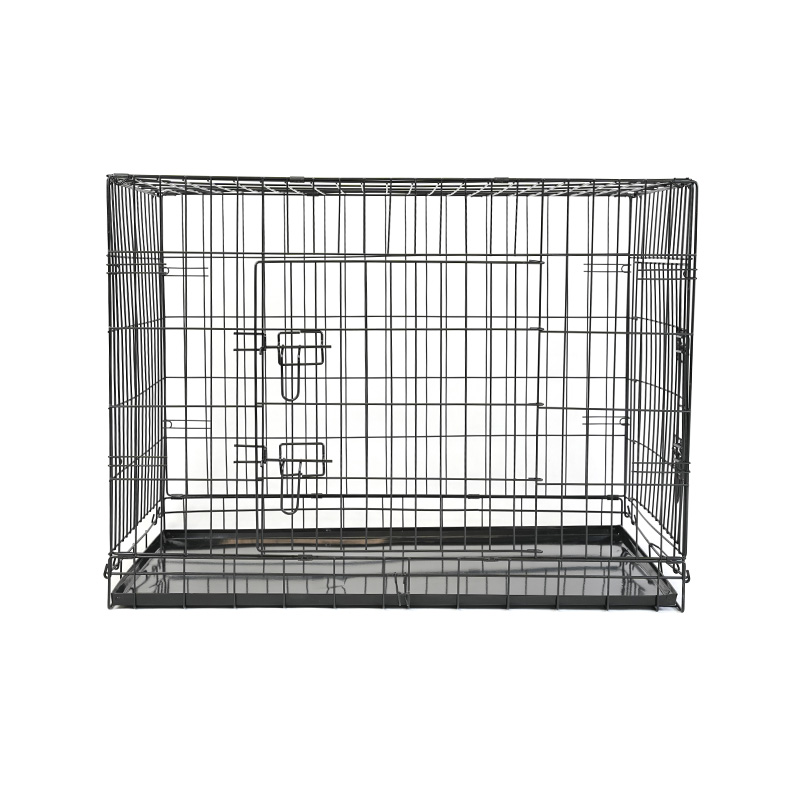
A metal dog kennel or crate is an enclosure constructed primarily from steel or other metal alloys, designed to confine a dog safely for training, transport, or housing. Unlike fabric or plastic crates, metal crates offer superior structural integrity and visibility.
The typical metal crate consists of several components. The frame is made from hollow or solid steel wire, welded at intersections to create a rigid structure. The door features a locking mechanism, usually a bolt latch or a spring loaded slide bolt. A removable plastic tray sits at the bottom to catch waste and facilitate cleaning. Some models include dividers to adjust the interior space as a puppy grows.
Metal crates are available in two primary configurations. Folding or collapsible crates have hinge points that allow the crate to flatten for storage and transport. Fixed or weldment crates have rigid welded corners and cannot be folded. Folding crates are more popular for home use because they can be stored when not needed. Fixed crates are stronger and preferred for commercial kennels and heavy duty applications.
The gauge of the metal wire determines the crate strength. Lower gauge numbers indicate thicker wire. A 10 gauge wire is 3.4 millimeters thick and very strong. A 16 gauge wire is 1.6 millimeters thick and suitable only for small, calm dogs. For large or powerful breeds, 10 gauge or 12 gauge wire is recommended.
Fabric or soft sided crates have gained popularity for travel and temporary use. These crates are made from nylon or polyester fabric stretched over a collapsible metal or plastic frame. They are lightweight and pack into small carrying bags. However, they differ fundamentally from metal crates in several important ways.
Durability is the most significant difference. Fabric crates cannot withstand chewing, scratching, or digging. A determined dog can tear through fabric in minutes, creating a hole large enough to escape. Metal crates, in contrast, resist chewing and scratching. Even a powerful dog cannot bite through steel wire.
Ventilation is better in metal crates. The open wire construction allows air to circulate freely from all sides. Fabric crates typically have mesh windows on two or three sides, but the solid fabric panels restrict airflow. On warm days, a fabric crate can become uncomfortably hot inside.
Visibility affects dog anxiety. Dogs in metal crates can see their surroundings from all angles. This visibility can reduce anxiety for some dogs because they can see their owners approaching. However, for dogs that become excited by visual stimuli, the open visibility of a metal crate may increase stress. Fabric crates block the view on solid panels, which can calm some anxious dogs.
Cleaning is easier with metal crates. Spills and accidents can be wiped off the metal wire and the plastic tray. Fabric crates absorb liquids and odors. The fabric covers often require machine washing, and the absorbent padding may need replacement after repeated accidents.
The table below summarizes the key differences between metal and fabric crates.
| Feature | Metal Crate | Fabric Crate |
|---|---|---|
| Chew Resistance | Excellent wire cannot be chewed | Poor fabric can be torn |
| Ventilation | Excellent open wire on all sides | Moderate mesh windows only |
| Visibility | Full visibility from all angles | Limited visibility |
| Cleaning Ease | Easy wipe surfaces | Difficult fabric absorbs messes |
| Weight | Heavy typically 10 to 25 kg | Light typically 2 to 5 kg |
| Portability | Folds flat but remains heavy | Folds into small carry bag |
| Security Level | High for most dogs | Low for determined dogs |
| Best Application | Home use, long term confinement | Travel, temporary use, calm dogs |
For pet owners with a puppy that chews, a fabric crate is not a viable option. For owners who travel frequently by car and have a well behaved adult dog, a fabric crate may be sufficient.
Plastic crates, sometimes called airline crates or kennels, are the second major alternative to metal crates. These crates consist of two plastic shells that bolt together, with a metal door at one end. They are the standard for air travel because they meet airline cargo requirements.
Structural strength differs between the two types. A well made plastic crate can be very strong, especially in compression. The smooth plastic shell has no sharp edges and distributes impact forces across the entire surface. However, plastic can crack if dropped on a hard surface or if a powerful dog throws its weight against the door repeatedly.
Temperature regulation differs significantly. Plastic crates retain heat much more than metal crates. The solid plastic shell blocks airflow, allowing the interior temperature to rise quickly in warm conditions. This makes plastic crates unsuitable for use in direct sunlight or warm climates unless placed in air conditioned spaces. Metal crates, with their open wire construction, allow heat to dissipate more readily.
Dog visibility affects behavior differently. Plastic crates block the view on five sides, with only the metal door providing visibility. This den like environment can be calming for anxious dogs because they cannot see external triggers. For car travel, the reduced visibility may also reduce motion sickness in some dogs.
Security concerns vary by dog behavior. For a dog that scratches at the door, a plastic crate may be more secure because the smooth surface offers nothing to grip. For a dog that bites the door frame, the metal door edge on a plastic crate can be damaged. Metal crates with thick gauge wire resist both scratching and biting.
The table below compares metal and plastic crates across key parameters.
| Feature | Metal Crate | Plastic Crate |
|---|---|---|
| Structural Strength | High thick wire resists bending | High but plastic can crack |
| Chew Resistance | Excellent | Good smooth surface discourages chewing |
| Ventilation | Excellent open wire | Poor solid shell blocks airflow |
| Temperature Control | Cool in warm conditions | Retains heat |
| Dog Visibility | Full visibility | Den like limited visibility |
| Airline Approval | No not accepted for cargo | Yes IATA approved models available |
| Cleaning Ease | Easy wipe surfaces | Easy wipe surfaces |
| Weight | Heavy | Moderate typically 5 to 15 kg |
| Best Application | Home use, car travel | Air travel, anxious dogs |
For owners who need to fly with their dog, a plastic crate is often the only option. For home use in a warm climate, a metal crate is more comfortable for the dog.
The strength of a metal dog crate depends primarily on the wire gauge used in its construction. Wire gauge refers to the thickness of the metal wire. In the United States, the American Wire Gauge system is standard. In other countries, wire diameter is expressed in millimeters.
Smaller gauge numbers indicate thicker wire. A 9 gauge wire has a diameter of 3.8 millimeters and is extremely strong. A 10 gauge wire measures 3.4 millimeters. A 12 gauge wire measures 2.7 millimeters. A 14 gauge wire measures 1.9 millimeters. A 16 gauge wire measures 1.6 millimeters.
For different dog sizes and temperaments, different wire gauges are appropriate. A 16 gauge crate is suitable only for very small dogs under 5 kilograms that do not chew or push against the crate walls. A 14 gauge crate works for small to medium dogs up to 15 kilograms. A 12 gauge crate is appropriate for medium to large dogs up to 35 kilograms. A 10 gauge or 9 gauge crate is necessary for large breeds over 35 kilograms or for any dog known to chew or dig.
The wire spacing or grid size also matters. Spacing between wires should be small enough to prevent the dog from getting its head, legs, or teeth stuck. For small dogs, spacing of 2.5 centimeters or less is recommended. For medium dogs, spacing of 5 centimeters is acceptable. For large dogs, spacing of 7.5 to 10 centimeters is common.
The welding quality at wire intersections determines longevity. Poor welds can break under stress, creating sharp points that can injure the dog. Quality crates use full penetration welds or heavy tack welds at each intersection. The weld should be smooth and free of sharp spatter.
The door and locking mechanism are the most frequently operated components of a metal dog crate. Poor design here leads to user frustration and potential escape.
Door design varies among manufacturers. Single door crates have one door, typically at the front. Double door crates have a front door and a side door, allowing placement flexibility in tight spaces. Triple door crates add a second side door or a top door. Top opening doors are useful for small crates where reaching into the front door is awkward.
The door latch is the critical security component. The simplest latch is a single slide bolt that moves horizontally into a receiver. This design works for calm dogs but can be opened by a determined dog that learns to push the bolt. More secure designs include double slide bolts at top and bottom of the door, or a spring loaded latch that requires simultaneous squeezing of two releases.
For professional kennels and veterinary clinics, a padlock compatible latch is essential. This allows the door to be locked with a small padlock, preventing unauthorized access or escape. Some crates include a built in combination lock for applications where keys are easily lost.
The door hinge should be welded to the frame with full penetration welds. Hinges made from continuous steel rod that runs the full height of the door are stronger than individual hinge tabs. The hinge pin should be captive so it cannot be removed by a dog pushing from inside.
Metal dog crates are exposed to moisture from urine, cleaning solutions, and ambient humidity. Without corrosion protection, the metal will rust, compromising structural integrity and creating sharp, dangerous edges.
The base metal for most crates is carbon steel. Carbon steel is strong and affordable but rusts readily when exposed to moisture. To prevent rust, the steel must receive a protective finish.
Powder coating is the most common finish for metal dog crates. In this process, electrostatically charged dry powder is sprayed onto the metal, then baked in an oven. The powder melts and flows into a continuous coating. Powder coating is durable, resistant to scratching, and available in many colors. It does not off gas volatile organic compounds.
Zinc plating or galvanizing provides a different type of protection. A thin layer of zinc is applied to the steel through electroplating or hot dipping. Zinc corrodes preferentially to steel, sacrificing itself to protect the underlying metal. Galvanized finishes are very durable but have a dull gray appearance that some consumers find unattractive.
Stainless steel is the premium material for metal dog crates. Stainless steel contains chromium, which forms a passive oxide layer that prevents rust. Stainless steel crates are essentially immune to corrosion and can be sanitized with strong cleaning chemicals. They are the standard for veterinary clinics, research facilities, and quarantine kennels. The primary disadvantage is cost, typically three to five times that of powder coated carbon steel.
| Material | Corrosion Resistance | Cost | Typical Application |
|---|---|---|---|
| Powder Coated Steel | Good coating must be intact | Low to moderate | Home use, retail crates |
| Galvanized Steel | Very Good even if scratched | Moderate | Outdoor kennels, commercial use |
| Stainless Steel | Excellent virtually immune | High | Veterinary clinics, research, quarantine |
| Uncoated Steel | Poor rusts rapidly | Very low | Not recommended for any application |
For export buyers, verify that the crate finish is appropriate for the destination climate. Coastal regions with salt air require higher corrosion resistance than inland areas.
Selecting the correct crate size is essential for dog safety and comfort. A crate that is too small restricts movement and can cause physical injury. A crate that is too large may be used by the dog as a bathroom area, with the dog eliminating in one corner and sleeping in another.
The correct size allows the dog to stand up without hitting its head, turn around easily, and lie down stretched out. To measure a dog for a crate, measure from the tip of the nose to the base of the tail. Add 5 to 10 centimeters for standing room. Measure from the floor to the top of the head while the dog is sitting. This is the minimum height needed.
The table below provides general size guidelines for common breeds. Individual dogs may vary, so measurements are always recommended.
| Crate Size | Length x Width x Height (cm) | Recommended Breeds | Dog Weight Range |
|---|---|---|---|
| Extra Small | 48 x 30 x 35 | Chihuahua, Yorkie, Toy Poodle | Up to 5 kg |
| Small | 61 x 43 x 51 | Shih Tzu, Maltese, French Bulldog | 5 to 10 kg |
| Medium | 76 x 51 x 58 | Beagle, Cocker Spaniel, Pug | 10 to 18 kg |
| Intermediate | 91 x 58 x 64 | Border Collie, Staffy, Australian Shepherd | 18 to 27 kg |
| Large | 107 x 66 x 71 | Labrador, Golden Retriever, Boxer | 27 to 36 kg |
| Extra Large | 122 x 76 x 81 | German Shepherd, Rottweiler, Husky | 36 to 45 kg |
| XX Large | 137 x 86 x 91 | Great Dane, Mastiff, Saint Bernard | 45+ kg |
For puppies, a crate with a divider panel is recommended. The divider allows the owner to reduce the interior space when the puppy is small, then move the divider back as the puppy grows. This prevents the puppy from using one corner as a bathroom while sleeping in another.
Different use cases require different crate features. Manufacturers and distributors should understand these requirements to match products with customer needs.
For air travel, the crate must meet International Air Transport Association standards. IATA approved crates have specific requirements: the door must have a secure locking mechanism that cannot be opened by the dog or by ground handlers accidentally; ventilation openings must be present on three sides; the crate must have live animal stickers and directional arrows; the hardware must be recessed or flush to prevent snagging. Plastic crates are the standard for air travel, though some airlines accept heavy duty metal crates.
For veterinary clinics and grooming salons, stackable crates maximize floor space. These crates have flat tops and recessed casters, allowing them to be stacked multiple units high. Stainless steel construction is preferred because it can be disinfected without corrosion. The door mechanism should allow one handed operation while holding a dog.
For car travel, a crate that fits securely in the cargo area or back seat is essential. The crate should have integrated tie down points for straps. Some metal crates include feet that fit into a base plate bolted to the vehicle floor. For dogs that experience car anxiety, a crate that can be partially covered with a blanket may be helpful.
For outdoor kennels, the crate must withstand weather extremes. Galvanized or stainless steel construction is required. The crate should have a roof to protect from sun and rain. The bottom should be elevated off the ground to prevent rusting and to allow airflow underneath. A separate sleeping box within the kennel gives the dog a sheltered area.
For heavy duty or escape artist dogs, reinforced crates are available with thicker wire, double locks, and reinforced corners. These crates are significantly heavier and more expensive than standard crates but are necessary for dogs that have destroyed standard crates.
When you select a Metal Dog Kennels & Crates product, always match the construction quality and features to the specific application and dog temperament.
Proper cleaning and maintenance extend the life of a metal dog crate and maintain a healthy environment for the dog.
The removable plastic tray at the bottom of most crates should be cleaned daily for house training puppies and weekly for adult dogs. Use mild dish soap and warm water. Avoid harsh chemicals like bleach or ammonia, which can damage the plastic and create fumes harmful to the dog. For disinfection, use a veterinary approved disinfectant diluted according to instructions.
The metal wire surfaces should be wiped down periodically to remove dust and dried saliva. A damp cloth with mild soap is sufficient for routine cleaning. For heavy soil, a soft brush can remove dried material from wire intersections. Do not use abrasive cleaners or steel wool, which will scratch the powder coating and expose the steel to rust.
Inspect the crate regularly for damage. Check welds for cracking. Look for rust spots, especially at the bottom where urine contact occurs. Examine the door latch for wear. Test that the latch engages fully and cannot be opened by pushing from inside. Replace any crate with broken welds or severe rust, as these conditions create sharp edges that can injure the dog.
For powder coated crates that develop small rust spots, sand the affected area lightly and apply touch up paint designed for metal. Rust never sleeps, and small spots will spread if left untreated. For galvanized crates, rust indicates that the zinc coating has been compromised and the underlying steel is corroding. Galvanized crates are difficult to repair at home.
While metal crates are generally safe, several potential hazards must be addressed through proper design and use.
Sharp edges are the most common safety issue in poorly made crates. Wire ends that are not properly finished can cut a dog’s paw or nose. Quality crates use wire ends that are bent back into the weld or covered with plastic end caps. Before purchasing, run a hand over all wire ends to detect sharp points.
Gap size between wires must be appropriate for the dog size. Small dogs can get their heads stuck between wires that are spaced too widely. This can lead to panic, injury, or strangulation. For any dog under 10 kilograms, wire spacing should not exceed 4 centimeters. For very small dogs, spacing of 2.5 centimeters or less is recommended.
Door pinch points occur where the door meets the frame. When the door closes, there should be no gap large enough to trap a toe or tail. The door should swing freely without binding. The latch should engage smoothly without requiring force that could pinch fingers.
Collapse hazards exist in folding crates. If the folding mechanism is not fully locked into position, the crate can collapse while the dog is inside. Always verify that all locking tabs are engaged before placing the dog in a folding crate. Some folding crates have secondary safety locks that prevent accidental collapse.
Heat management is important in metal crates. Because metal conducts heat, a metal crate left in direct sunlight can become dangerously hot. The metal surfaces can burn a dog’s paw pads, and the interior temperature can rise rapidly. Metal crates should be placed in shaded areas during warm weather.
The selection of a metal dog crate or alternative crate type should be driven by the specific application, dog characteristics, and user requirements.
For home use with a dog that is not destructive, a powder coated folding metal crate offers the best balance of value, ventilation, and convenience. The ability to fold the crate for storage when guests visit is a significant advantage. Choose a wire gauge appropriate for the dog size, with 12 gauge being sufficient for most dogs under 35 kilograms.
For air travel, a plastic IATA approved crate is necessary. Metal crates are not accepted by airlines for cargo transport. For car travel, a metal crate secured with straps or tie downs works well, provided the crate fits in the vehicle.
For veterinary clinics, groomers, and quarantine facilities, stainless steel crates are the professional standard. The corrosion resistance and cleanability justify the higher cost. For escape artist dogs that have destroyed standard crates, heavy duty metal crates with thick wire and reinforced doors are available.
For outdoor kennels, galvanized metal crates with weather protection are the appropriate choice. The zinc coating resists rust better than powder coating when exposed to rain and humidity.
By understanding the technical differences presented in this article, buyers can confidently select the right crate for each unique situation. The global pet products market continues to grow, and products that prioritize dog safety, owner convenience, and durability will find ready customers.
Q1: What wire gauge is best for a metal dog crate for a large breed like a German Shepherd?
A: For a large breed over 35 kilograms, a wire gauge of 10 or 9 is recommended. Ten gauge wire measures 3.4 millimeters in diameter and provides excellent strength. Twelve gauge wire at 2.7 millimeters is acceptable for calmer large dogs but may bend over time with a determined dog. Avoid 14 gauge or thinner wire for any dog over 25 kilograms.
Q2: Can a metal dog crate be used outdoors permanently?
A: Yes, but with specific requirements. The crate must be made from galvanized steel or stainless steel to resist rust. Standard powder coated crates will rust within months when exposed to rain and humidity. The crate needs a roof or cover to protect from direct sun and rain. The bottom should be elevated off the ground to prevent moisture wicking. A sleeping box within the kennel provides shelter.
Q3: How do I stop my dog from chewing the metal bars of the crate?
A: Chewing metal bars can damage the dog’s teeth. First, ensure the dog is getting adequate exercise and mental stimulation before being crated. Second, provide safe chew toys inside the crate. Third, apply a bitter tasting spray to the bars. Fourth, consider a heavy duty crate with thicker wire that is less appealing to chew. If the behavior continues, consult a professional trainer, as crate chewing often indicates anxiety.
Q4: Are metal dog crates allowed on airplanes?
A: For cargo transport, most airlines require IATA approved plastic crates, not metal crates. The IATA Live Animals Regulations specify that crates must have solid walls and ventilation openings, which metal crates with open wire construction do not meet. For in cabin travel with a small dog that fits under the seat, a soft sided carrier is used. Always check with the specific airline before booking.
Q5: How often should the plastic tray in a metal crate be replaced?
A: The plastic tray should be replaced when it shows cracks, deep scratches that harbor bacteria, or significant warping. With normal use and proper cleaning, a tray lasts two to three years. If the dog chews the tray, replacement may be needed sooner. Replacement trays are available from the crate manufacturer or as universal fit trays from pet supply retailers. Always replace a cracked tray immediately, as the sharp edges can injure the dog.