 Inquiry

 English
 中文简体
中文简体 Deutsch
- Type:
- Industry News
- Date
- 2026-Sep-04
News
Home / News / Industry News / Heavy-Duty vs Standard Pet Cage: Which Is Safer for Large Breed Dogs? A Complete Guide
Content
At 40 kg, a German Shepherd can push a standard 36-inch wire crate out of line with its shoulder in one motion. The first thing that gives is never the dog. It is the wire. When you compare a heavy-duty pet cage against a standard pet cage for a large-breed dog, the deciding factor is not price or looks. It is whether the structure can absorb the force of a 40 kg animal under panic, stress, or excitement. Manufacturers such as Nantong Dihang Metal Products Co., Ltd. build heavy-duty models with thicker wire, reinforced door locks, and square-tube frames because large dogs generate far more pressure than a thin standard crate was designed to hold.
A heavy-duty pet cage keeps a large-breed dog contained under pressure. A standard pet cage protects a dog that is already calm. That single difference defines the safety boundary.
A heavy-duty pet cage differs from a standard pet cage in three measurable ways: wire gauge, frame construction, and door locking geometry. Once you understand those three variables, you can evaluate any crate on the market without relying on marketing labels.
Standard cages typically use 3 to 4 mm round wire, spot-welded at the corners, with a single slide-bolt latch and a thin plastic tray. Heavy-duty cages use 6 to 8 mm wire or square steel tube, reinforced welds, dual door latches, and thicker ABS trays. The wire gauge is the clearest indicator of whether a crate can survive contact with a large dog.
Thicker wire means the bars distort less under load. Thicker frame sections mean the whole cage stays rigid when the dog leans or pushes. Dual latches mean the door cannot be shaken open by a dog throwing its weight against it. Together, these three benefits prevent the classic escape sequence every large-breed owner dreads.
If the wire is not thick enough to stay straight when a 40 kg dog leans on it, no amount of crate training makes that cage safe.
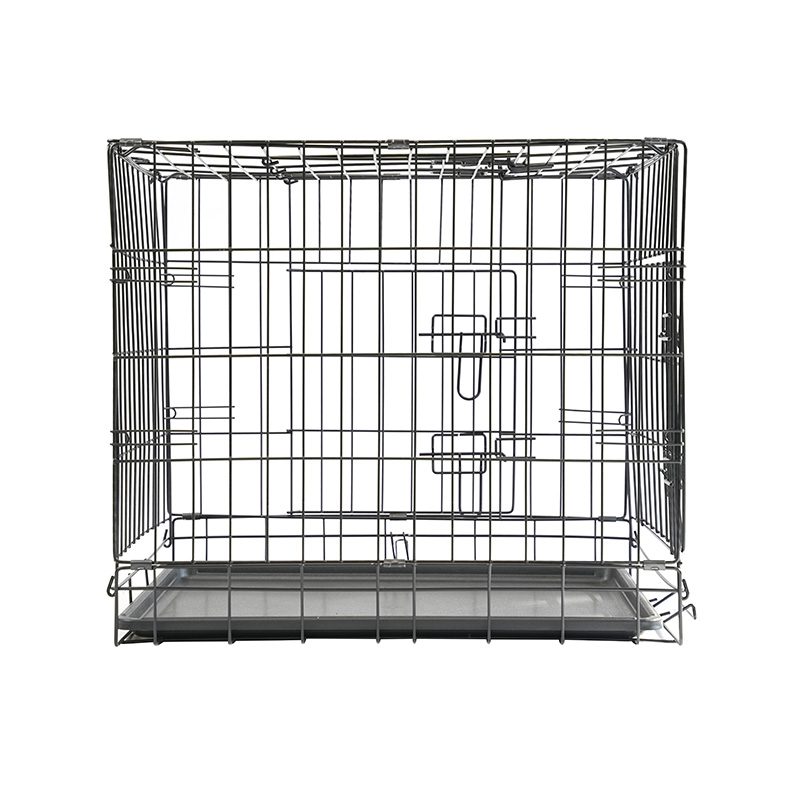
 DH120-2 Heavy Duty Metal Dog Cage Pet Crate With Abs TrayDH120-2 Heavy Duty Metal Dog Cage Pet Crate With Abs Tray is a durable cage designed for pet dogs. It combines the stability of metal structure with the easy cleanabil...View Product →
Standard cages fail large-breed dogs in three specific, predictable ways: bar bending, latch slipping, and weld fracture. A large dog does not fail a standard cage randomly. It fails it through one of those three mechanical paths.
A 40 kg dog leaning on the corner of a thin-wire crate can flex a 3 mm bar outward. Once that bar is bent, the gap between wires becomes an opening, and the dog can push its head or paw through. Heavier wire resists this deformation almost completely.
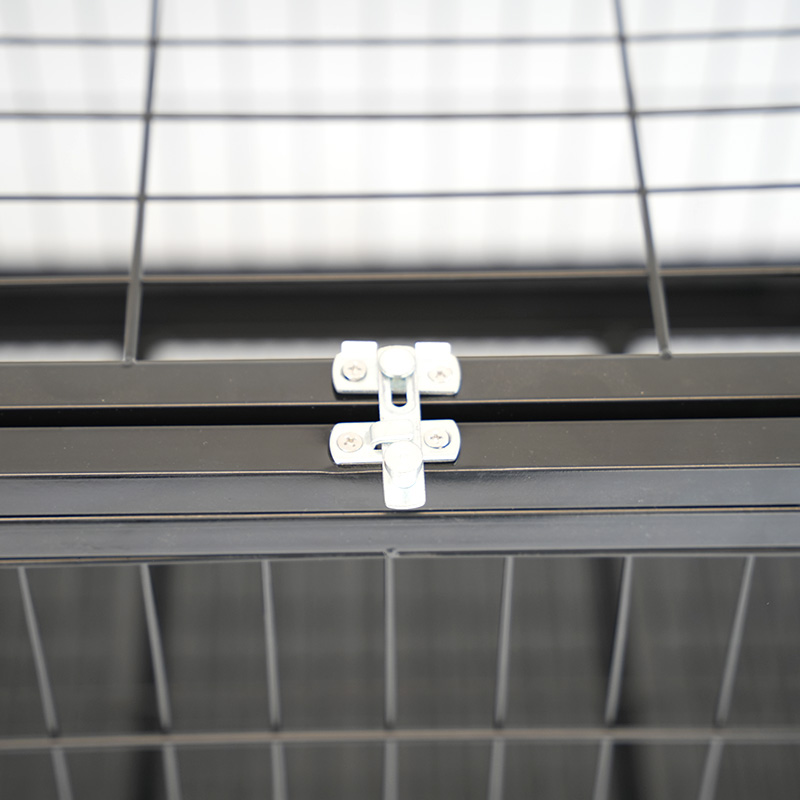
Single slide-bolt latches rely on friction and a thin metal tab. A large dog that throws itself backward against the door can dislodge a single bolt in a fraction of a second. Dual locks spread the load across two points, making that failure mode very difficult to trigger.
Spot-welded corners are the weakest link on a standard crate. The sway of a heavy dog opens micro-cracks in the weld, which then spread over weeks or months. A fractured weld leaves a sharp wire tip, which is an injury risk as well as an escape risk.
Bending, slipping, weld fracture. That is the full sequence of a standard cage failing a large dog, and it is why one thicker wire can be the difference between a calm night and a 3 a.m. escape.
On the core safety factors that matter for large breeds, heavy-duty cages score roughly twice as high as standard cages. The chart below compares relative resistance scores across five key factors.
The gap between a 3 mm wire and a 6 mm wire is not a difference of two millimetres. It is a difference between a cage that deforms and a cage that holds.
| Safety factor | Standard cage | Heavy-duty cage |
| Wire gauge | 3 to 4 mm | 6 to 8 mm |
| Frame section | Round wire, spot-welded | Square steel tube or thick wire |
| Door locking | Single slide bolt | Double latch or bolt-spring |
| Typical dog weight | Up to 25 kg | 50 kg and above |
| Tray material | Thin plastic | ABS or reinforced plastic |
| Escape resistance | Moderate | High |
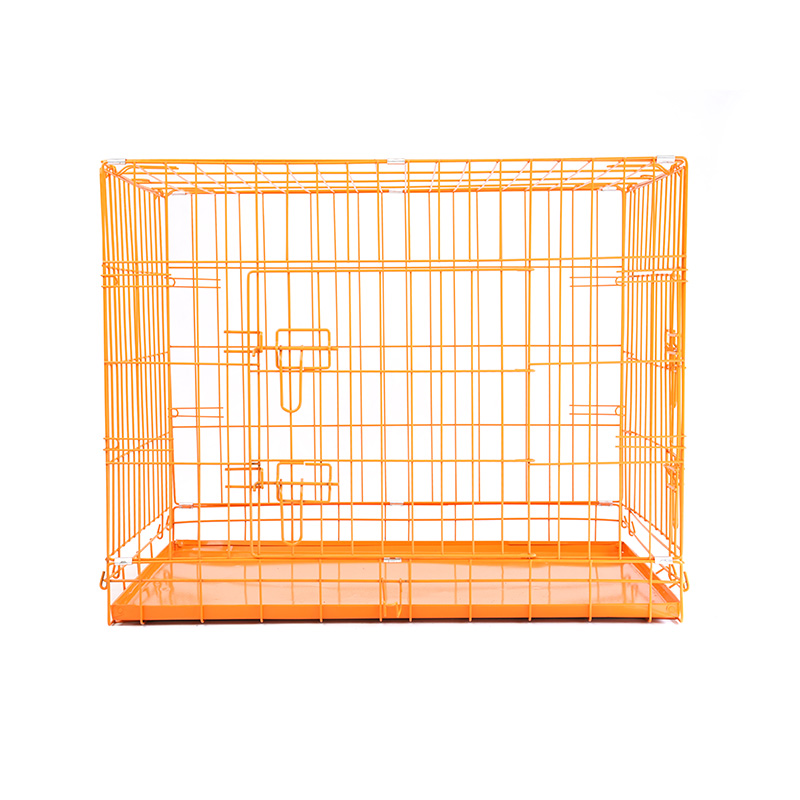
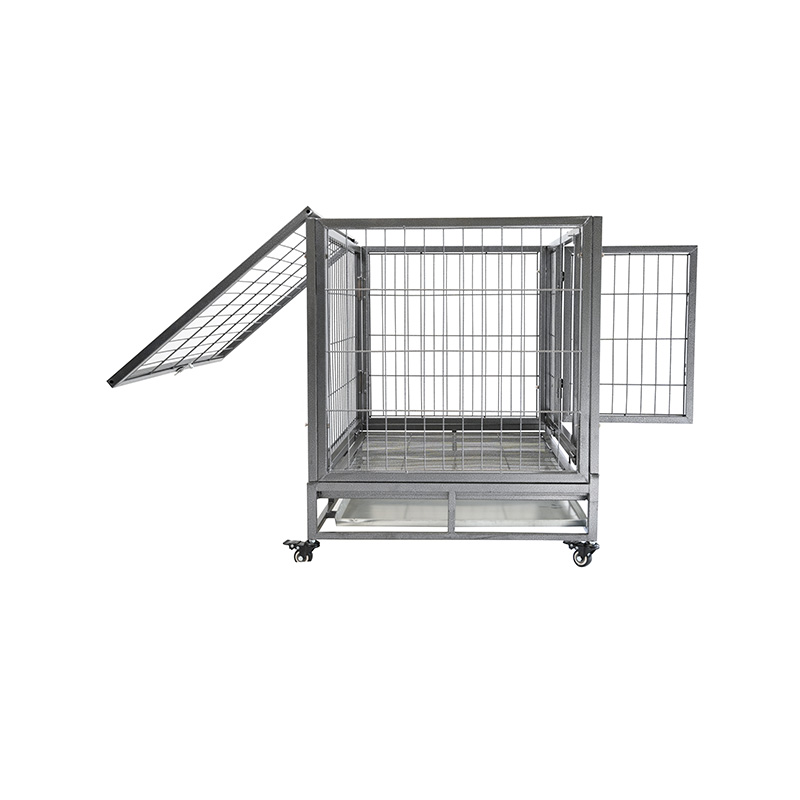 DH120-3 Foldable Heavy Duty Metal Pet Cage Cat And Dog CrateDH120-3 Foldable Heavy Duty Metal Pet Cage Cat And Dog Crate is made of high-strength metal materials to ensure that the structure is stable and durable, able to withs...View Product →
Buy a heavy-duty pet cage if your dog weighs more than 25 kg, is a confirmed chewer or digger, or has already shown signs of crate aggression. For a large-breed dog that spends several hours a day in its crate, the extra cost is usually recovered in avoided vet bills and damaged furniture.
Dogs under 15 kg that are crate trained and calm. Short containment periods under one hour. Indoor use only, with no history of chewing or escaping.
Dogs over 25 kg, confirmed chewers, diggers, or escape artists. Long containment periods. Travel, outdoor, or high-stress environments where panic is possible.
If your dog is over 25 kg, the real question is not whether a heavy-duty cage looks better in the room. The question is whether you are prepared for the night a standard cage stops being a safe place.
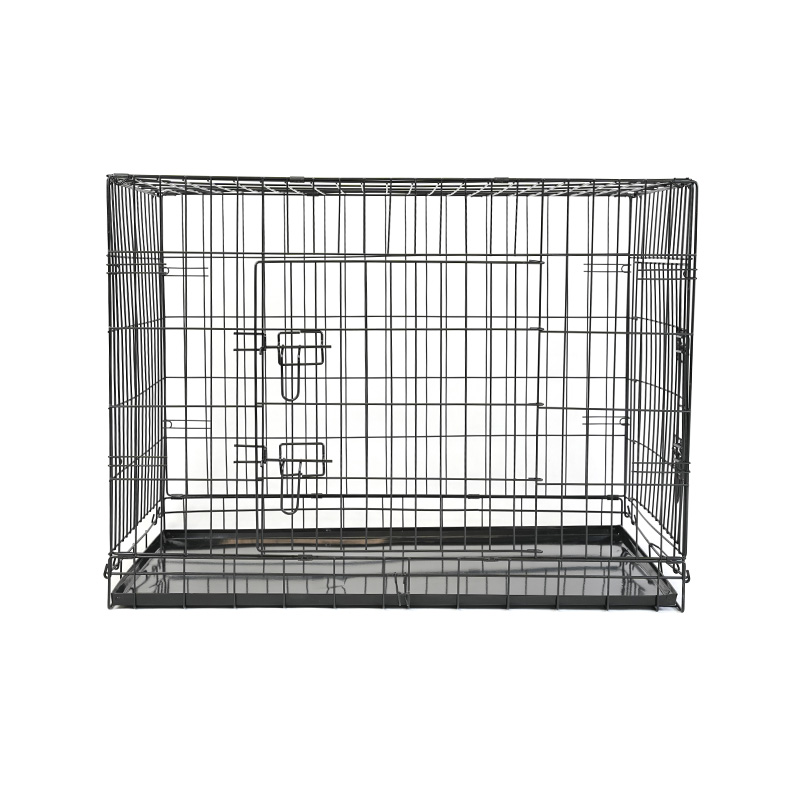
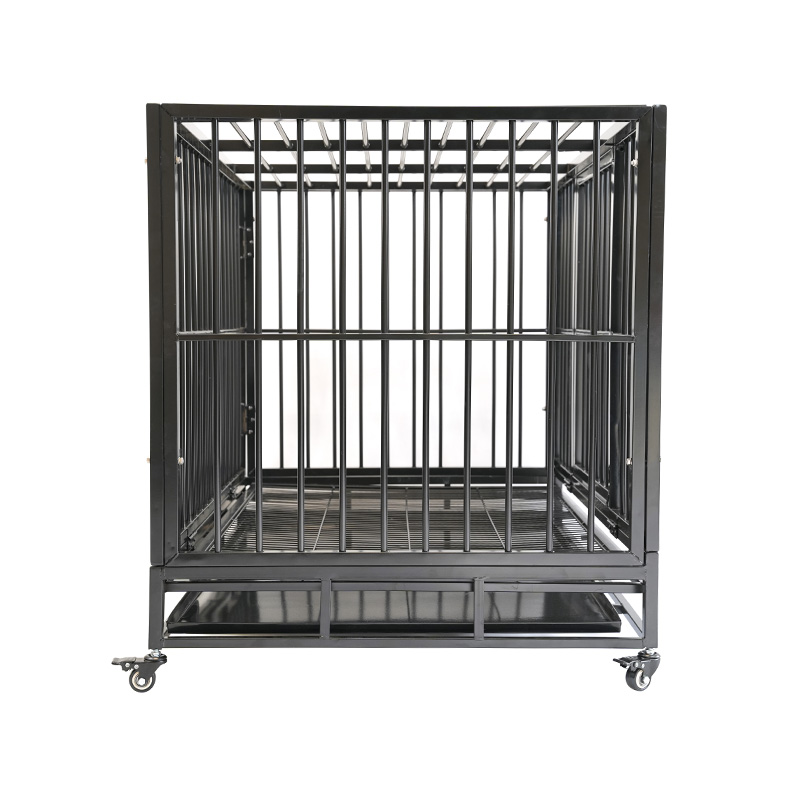 DH121-2 Heavy Duty Pet Kennel Foldable With Plastic TrayDH121-2 Heavy Duty Pet Kennel Foldable With Plastic Tray is a safe and comfortable travel companion designed for pets, combining durability, convenience and humanized ...View Product →
Before buying, weigh your dog and check the cage wire gauge. That one number predicts more about safety than any brand name.
Yes. A standard cage costs less upfront, but a large dog that breaks through it can damage the crate, hurt itself on sharp wire, or escape and cause injury elsewhere. A heavy-duty cage avoids that sequence, and its stronger frame typically lasts years longer under constant use.
Yes. Most heavy-duty designs keep a foldable frame without weakening the reinforcement. The foldable mechanism sits on the frame corners, not on the load-bearing wire, so a heavy-duty dog cage can be collapsed for transport and re-erected to the same structural stiffness.
Use 6 mm minimum for a 50 kg dog. Below 5 mm, the bars will eventually bend under the dog's own body weight when it leans against a corner. For a very heavy breed such as a Great Dane, look for square-tube frame construction rather than round wire alone.
If your dog is calm, trained, and below 25 kg, a standard cage can be enough. But body weight is not the only trigger. A sudden noise or separation episode can turn a calm dog into a panicked one, and a large dog's muscle mass does not disappear just because it is usually calm.