
 Inquiry

 English
 中文简体
中文简体 Deutsch
- Type:
- Industry News
- Date
- 2026-Mar-17
Industry News
Which Wire Kennel Cover Is Best for Your Dog?
Content
- 1 Understanding Wire Kennel Covers
- 2 Weather Protection Solutions
- 3 Comfort and Health Benefits
- 4 Finding the Right Fit
- 5 Material and Construction Quality
- 6 Why Choose Nantong Dihang Metal Products Co., Ltd.
- 7 Frequently Asked Questions
- 7.1 What specifications define a truly waterproof wire kennel cover for outdoor use?
- 7.2 How does breathable mesh wire dog crate cover design prevent overheating?
- 7.3 What evidence supports blackout wire kennel cover for anxiety relief effectiveness?
- 7.4 Why is custom fit wire kennel cover 48 inch sizing critical for large breeds?
- 7.5 What insulation values are achievable with insulated wire kennel cover winter protection systems?
- 8 References
Selecting the appropriate wire kennel cover requires understanding material engineering, environmental stress factors, and canine behavioral science. This comprehensive guide provides technical specifications, comparative performance data, and procurement criteria for pet product importers, veterinary equipment suppliers, and specialty retailers seeking premium kennel accessories.
Understanding Wire Kennel Covers
What Makes a Quality Kennel Cover?
Professional-grade wire kennel cover systems must satisfy multiple performance parameters simultaneously. The fundamental engineering challenge involves balancing environmental protection with adequate ventilation, structural stability with user convenience, and durability with cost-effectiveness.
Critical quality indicators include:
- Fabric tensile strength minimum 200N/5cm (warp and weft)
- UV resistance rating UPF 50+ for outdoor applications
- Water column pressure resistance ≥1000mm for waterproof variants
- Air permeability 50-100 mm/s for breathable configurations
- Flame retardancy compliance with CPAI-84 standards
Key Differences Between Cover Types
Market-available solutions demonstrate significant performance variations based on construction methodology:
| Construction Type | Primary Advantage | Limitation | Optimal Application |
|---|---|---|---|
| Single-layer polyester | Lightweight, economical | Limited insulation | Indoor climate-controlled environments |
| Laminated composite | Waterproof, durable | Reduced breathability | Outdoor exposure scenarios |
| Quilted multi-layer | Thermal insulation | Bulk, extended drying time | Cold climate operations |
| Mesh panel hybrid | Ventilation control | Complex manufacturing | Variable weather conditions |
Weather Protection Solutions
Waterproof Features for Outdoor Durability
waterproof wire kennel cover for outdoor use must withstand prolonged exposure to precipitation, humidity cycling, and ultraviolet degradation. The technical specification for genuine waterproof performance exceeds simple water-resistant treatments.
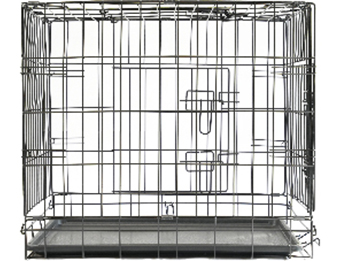
Engineering requirements include:
- Polyurethane (PU) coating minimum 1500mm hydrostatic head
- Thermoplastic polyurethane (TPU) lamination for seam integrity
- Double-stitched seams with waterproof tape sealing
- Graduated slope design preventing water pooling
- Corrosion-resistant hardware (304 stainless steel minimum)
Accelerated aging testing protocols subject materials to 500-hour xenon arc exposure simulating 2-3 years of outdoor service. Validated covers maintain >80% tensile strength retention post-exposure.
Insulated Designs for Cold Weather
insulated wire kennel cover winter protection systems address thermal bridging inherent in metal cage construction. Wire kennels conduct heat rapidly, creating cold stress risks for confined animals when ambient temperatures drop below 7°C (45°F).
Thermal performance engineering specifications:
| Insulation Component | Material Specification | R-Value Contribution | Weight Impact |
|---|---|---|---|
| Outer shell | 600D Oxford polyester PU-coated | Minimal | 180-220 g/m² |
| Thermal batting | Polyester hollow fiber 200g/m² | R-1.5 to R-2.0 | 200 g/m² |
| Reflective layer | Aluminized PET film | R-0.5 radiant barrier | 30 g/m² |
| Inner liner | 190T polyester taffeta | Minimal | 60 g/m² |
Nantong Dihang Metal Products Co., Ltd. integrates these specifications into winter-rated covers, utilizing thermal imaging validation to identify and eliminate cold bridge points at panel junctions.
Weather Resistance Manufacturing Standards
Our production facility, established in 2015, employs computerized cutting systems with ±1mm precision and ultrasonic welding for critical seam areas. Quality assurance protocols include 24-hour water spray testing (ASTM D751) and cyclic temperature testing (-20°C to 60°C) simulating seasonal extremes encountered in North American and European markets.
Comfort and Health Benefits
Breathable Mesh for Air Circulation
breathable mesh wire dog crate cover configurations solve the paradox of environmental protection versus respiratory health. Inadequate ventilation creates microenvironments with elevated CO₂, humidity, and temperature—factors contributing to heat stress and respiratory compromise.
Engineered mesh systems incorporate:
- Polyester monofilament mesh with 1.0-1.5mm aperture diameter
- Open area ratio 30-40% maintaining structural integrity
- Strategic placement at roof apex and side panels
- Adjustable flap systems enabling ventilation modulation
Computational fluid dynamics modeling demonstrates that properly positioned mesh panels achieve 15-20 air changes per hour under natural convection, adequate for thermoregulation in canines up to 40kg body mass.
Blackout Materials for Anxious Dogs
blackout wire kennel cover for anxiety relief addresses documented veterinary behavioral science. Canine anxiety responses—including noise phobia, separation distress, and travel stress—exhibit reduction in environments limiting visual stimuli.
Technical specifications for therapeutic blackout covers:
| Performance Parameter | Standard Cover | Anxiety-Relief Blackout Cover |
|---|---|---|
| Light transmission | 15-30% | <1% (99%+ blockage) |
| Sound attenuation | Minimal | 10-15 dB reduction |
| Interior darkness | Partial shading | Cave-like environment |
| Material construction | Single-layer | Triple-layer with blackout film |
The denning instinct—ancestral behavior pattern in canids—finds expression in enclosed, darkened spaces. Blackout covers simulate natural den conditions, reducing cortisol levels and autonomic stress indicators in susceptible individuals.
Temperature Regulation in All Seasons
Multi-season covers employ modular design principles enabling configuration adaptation. Removable insulation panels, reversible reflective/absorptive surfaces, and variable ventilation ports allow single-product functionality across climatic extremes.
Finding the Right Fit
Measuring Your Wire Kennel Correctly
Dimensional accuracy determines cover performance. Measurement protocols require:
- Length: Exterior base dimension front-to-rear at widest point
- Width: Exterior dimension side-to-side including corner welds
- Height: Vertical measurement from floor to top panel (not handle height)
- Door orientation: Documentation of front/side door configuration
Measurement tolerance allowance: Cover dimensions should exceed kennel dimensions by 2-3cm per side to accommodate structural irregularities without compromising tension fit.
Custom Fit Options for 48-Inch and Other Sizes
custom fit wire kennel cover 48 inch specifications represent high-demand sizing for large breed accommodation (German Shepherds, Labrador Retrievers, Golden Retrievers). The 48-inch classification (122cm length) requires specific engineering considerations:
| Dimension Category | Standard 48" Kennel | Cover Specification | Adjustment Range |
|---|---|---|---|
| Length | 1220mm | 1250mm | ±20mm drawcord |
| Width | 760mm | 790mm | ±15mm elastic tension |
| Height | 840mm | 870mm | ±30mm strap adjustment |
| Weight coverage | Up to 45kg dog mass | Reinforced stress points | 55kg structural rating |
Nantong Dihang Metal Products Co., Ltd. maintains dimension-specific pattern libraries covering 24", 30", 36", 42", 48", and 54" standard kennel sizes, with custom pattern development capability for proprietary cage dimensions.
Adjustable vs. Fixed Design Comparison
Procurement decisions require evaluation of flexibility requirements:
- Adjustable systems: Elastic cord hem, buckle straps, hook-and-loop fasteners. Advantage: Accommodation of dimensional variance between manufacturers. Disadvantage: Potential wind uplift in outdoor applications.
- Fixed custom fit: Pattern-matched to specific kennel model. Advantage: Optimal tension distribution, superior weather sealing. Disadvantage: Limited interchangeability between kennel brands.
Material and Construction Quality
Fabric Durability Standards
Industrial textile specifications for kennel covers must exceed consumer-grade pet product standards:
- Abrasion resistance: 25,000+ Martindale cycles (ISO 12947)
- Tear strength: Warp ≥25N, Weft ≥25N (Elmendorf method)
- Color fastness: Grade 4-5 (ISO 105-B02)
- Mildew resistance: AATCC 30 Test III, rating 1 (no growth)
Reinforcement Points That Matter
Structural failure analysis identifies critical stress concentration zones:
| Stress Point | Failure Mode | Engineering Solution |
|---|---|---|
| Corner seams | Tearing under tension | Bar-tack stitching, corner patches |
| Strap attachment | Pull-through under load | Box-X stitching, reinforced backing |
| Zipper terminals | Splitting, slider failure | YKK #8 or equivalent, double sliders |
| Panel junctions | Leakage, separation | Felled seams, seam sealing tape |
Easy-Care and Maintenance Features
Commercial and veterinary applications demand hygiene-maintainable designs. Specifications include:
- Machine washable construction (industrial laundry compatibility)
- Quick-release fastening systems enabling removal in <60 seconds
- Mildew-resistant treatments maintaining efficacy through 50+ wash cycles
- Repairable design with field-replaceable components
Why Choose Nantong Dihang Metal Products Co., Ltd.
Manufacturing Expertise Since 2015
Our specialized focus on pet containment and accessory products has generated accumulated technical knowledge in metal fabrication and textile integration. Production capabilities include:
- ISO 9001:2015 certified quality management systems
- In-house metal fabrication (wire gauge 2.5mm-6.0mm)
- Textile manufacturing partnership network with OEKO-TEX Standard 100 compliance
- Product development cycle averaging 45 days from concept to production sample
Global Export Experience and Quality Control
Our established export operations serve importers across North America, Europe, and Australasia. Quality assurance protocols encompass:
- Pre-shipment inspection (PSI) per AQL 2.5 standards
- Material certification documentation (RoHS, REACH compliance)
- Packaging engineering for containerized ocean freight optimization
- Documentation support for customs clearance and import compliance
Communication protocols emphasize technical specification confirmation, production timeline transparency, and proactive issue resolution maintaining the rapid response capability our partners require.
Wholesale and Custom Order Capabilities
We welcome engagement from pet product distributors, veterinary supply chains, and specialty retailers seeking reliable wire kennel cover supply partnerships. Our technical team provides specification consultation, sample evaluation, and production planning to integrate our manufacturing capabilities with your market requirements.
Frequently Asked Questions
What specifications define a truly waterproof wire kennel cover for outdoor use?
Authentic waterproof performance requires PU coating achieving minimum 1500mm hydrostatic head, taped seams preventing capillary leakage, and UV-stabilized materials maintaining integrity beyond 500 hours accelerated aging. Water-resistant treatments without seam sealing provide inadequate protection for prolonged outdoor exposure.
How does breathable mesh wire dog crate cover design prevent overheating?
Engineered mesh panels with 30-40% open area ratio, positioned at thermal convection points (roof apex, side walls), enable 15-20 air changes per hour. This ventilation rate supports evaporative cooling and prevents CO₂ accumulation, critical for brachycephalic breeds and conditions above 24°C ambient temperature.
What evidence supports blackout wire kennel cover for anxiety relief effectiveness?
Veterinary behavioral studies demonstrate that enclosed, darkened environments reduce cortisol levels and autonomic stress markers in noise-phobic and separation-anxious dogs. Blackout covers achieving <1% light transmission simulate natural den conditions, triggering innate calming responses. However, individual temperament variation requires veterinary consultation for severe anxiety cases.
Why is custom fit wire kennel cover 48 inch sizing critical for large breeds?
The 48-inch kennel category accommodates dogs to 45kg body mass, generating significant structural loading on cover attachment points. Custom patterning ensures tension distribution across the frame rather than concentrating stress at corners, preventing tearing and maintaining weather sealing integrity under wind load and animal movement.
What insulation values are achievable with insulated wire kennel cover winter protection systems?
Multi-layer constructions incorporating 200g/m² polyester batting and aluminized radiant barriers achieve effective R-values of 2.0-2.5. This thermal resistance, combined with elimination of metal-to-air direct contact, maintains interior temperatures 8-12°C above ambient in sub-freezing conditions—critical for preventing cold stress in short-coated breeds and geriatric animals.
References
- American Society for Testing and Materials. (2022). ASTM D751-19: Standard Test Methods for Coated Fabrics. West Conshohocken, PA: ASTM International.
- American Association of Textile Chemists and Colorists. (2023). AATCC 30-2017: Antifungal Activity, Assessment on Textile Materials. Research Triangle Park, NC: AATCC.
- Campbell, W. E. (2019). Behavior Problems in Dogs: A Clinical Approach to Treatment. St. Louis, MO: Elsevier Health Sciences.
- International Organization for Standardization. (2022). ISO 12947-2:2016 Textiles — Determination of the abrasion resistance of fabrics by the Martindale method. Geneva, Switzerland: ISO.
- Landsberg, G., Hunthausen, W., & Ackerman, L. (2013). Handbook of Behavior Problems of the Dog and Cat. Edinburgh: Saunders/Elsevier.
- Overall, K. L. (2013). Manual of Clinical Behavioral Medicine for Dogs and Cats. St. Louis, MO: Elsevier Health Sciences.



Nantong Dihang Metal Products Co., Ltd.
Product Center
Contact Us
- +86-15262716185
- [email protected]
- Group 1, Guzhuang Village, Qutang Town, Haian Country, Nantong, Jiangsu, China
Copyright © 2023 Nantong Dihang Metal Products Co., Ltd. All Rights Reserved.
